Department

About Department

About Department

The Department of Civil Engineering was started in the year 2009. The department has well-qualified and experienced faculty with specializations in various branches of Civil Engineering, such as Structural Engineering, Soil Mechanics, Hydraulics, Environmental Engineering, Water Resources and GIS. The department is maintaining its superior position in pass percentage under Anna University, Chennai in the Villupuram zone. From its inception, the department has been keen on developing the instructional, analytical, and communication skills of budding engineers. The department is equipped with adequate classrooms, fully equipped laboratories, department library, computer facilities, and a seminar hall. It has several laboratories as per Anna University requirements, including Soil Mechanics Lab, Hydraulics Engineering Lab, Survey Lab, Concrete and Highway Engineering Lab, Strength of Materials Lab, Water and Wastewater Engineering Lab, and Computer Aided Design & Drafting Lab (CADD). Industrial visits, in-plant training, and projects are actively encouraged in various sectors.
Vision

To create civil engineers with global competency and to inculcate in them professionalism, work ethics and enterprising attitude for building a stronger society.

Mission

To provide technical education in design, analysis and field work. To create avenues for skill development in real time environment. To make them tackle the issues in climate change.

PEOs

PROGRAM EDUCATIONAL OBJECTIVES (PEOs)

1. Gain knowledge and skills in Civil engineering which will enable them to have a career and professional accomplishment in the public or private sector organizations

2. Become consultants on complex real life Civil Engineering problems related to Infrastructure development especially housing, construction, water supply, sewerage, transport, spatial planning.

3. Become entrepreneurs and develop processes and technologies to meet desired infrastructure needs of society and formulate solutions that are technically sound, economically feasible, and socially acceptable.

4. Perform investigation for solving Civil Engineering problems by conducting research using modern equipment and software tools.

5. Function in multi-disciplinary teams and advocate policies, systems, processes and equipment to support civil engineering.

PSOs

PROGRAM SPECIFIC OUTCOMES (PSOs)

1. Knowledge of Civil Engineering discipline: Demonstrate in-depth knowledge of Civil Engineering discipline, with an ability to evaluate, analyze and synthesize existing and new knowledge.

2. Critical analysis of Civil Engineering problems and innovation: Critically analyze complex Civil Engineering problems, apply independent judgment for synthesizing information and make innovative advances in a theoretical, practical and policy context.

3. Concept utilization and evaluation of engineering solutions to Civil Engineering: Issues Conceptualize and solve Civil Engineering problems, evaluate potential solutions and arrive at technically feasible, economically viable and environmentally sound solutions with due consideration of health, safety, and socio-cultural factors

PEOs

PROGRAM OUTCOMES (POs)

Engineering Outcomes
01
Engineering knowledge: Apply the knowledge of mathematics, science, engineering fundamentals, and an engineering specialization to the solution of complex engineering problems.
02
Problem analysis: Identify, formulate, review research literature, and analyze complex engineering problems reaching substantiated conclusions using first principles of mathematics, natural sciences, and engineering sciences.
03
Design/development of solutions: Design solutions for complex engineering problems and design system components or processes that meet specified needs with appropriate consideration for public health, safety, and cultural, societal, and environmental factors.
04
Conduct investigations of complex problems: Use research methods including design of experiments, analysis and interpretation of data, and synthesis of information to provide valid conclusions.
05
Modern tool usage: Create, select, and apply appropriate techniques, resources, and modern engineering and IT tools including prediction and modeling, with an understanding of limitations.
06
The engineer and society: Apply reasoning informed by contextual knowledge to assess societal, health, safety, legal, and cultural issues and responsibilities in engineering practice.
07
Environment and sustainability: Understand the impact of engineering solutions in societal and environmental contexts and the need for sustainable development.
08
Ethics: Apply ethical principles and commit to professional ethics, responsibilities, and norms of engineering practice.
09
Individual and team work: Function effectively as an individual, and as a member or leader in diverse and multidisciplinary teams.
10
Communication: Communicate effectively with the engineering community and society through reports, documentation, presentations, and clear instructions.
11
Project management and finance: Demonstrate knowledge of engineering and management principles and apply them to manage projects effectively in multidisciplinary environments.
12
Life-long learning: Recognize the need for and engage in independent and life-long learning in the context of technological change.

COs

 To View COs Details Click Here

Lab

Our Laboratory Facilities

Lab Details
SOIL MECHANICS LABORATORY
1. Describe the nature of soil problems encountered in civil engineering and give an overall preview of the behavior of soil.
2. Describes the nature of soil, especially the transmission of stresses between soil particles.
3. Studying primarily the dry soil behavior since many aspects of soil behavior can be understood by considering the interaction of soil without the presence of water.
4. In practical part, present testing procedures for making determinations of the soil properties to be used in the design of civil works projects.
ENVIRONMENTAL ENGINEERING LABORATORY
1. To introduce students to how the common environmental experiments relating to water and wastewater quality are performed.
2. This course will help students know which tests are appropriate for given environmental problems, statistically interpret laboratorial results and write technical reports, and apply the laboratorial results to problem identification, quantification, and basic environmental design and technical solutions.
STRENGTH OF MATERIALS LABORATORY
1. The objective of the strength of materials lab is to demonstrate the basic principles in the area of strength and mechanics of materials and structural analysis to the undergraduate students through a series of experiments.
2. In this lab the experiments are performed to measure the properties of the materials such as impact strength, tensile strength, compressive strength, hardness, ductility etc.
SURVEY PRACTICAL I & II LAB
The main objective of this project is to determine the distance between two points when direct measurement is difficult or not possible due to an obstruction between the two points such as a river, lake, building, tower, …etc.

CONCRETE & HIGHWAY LABORATORY

To learn the principles and procedures of testing concrete and highway materials and to get hands on experience by conducting the tests and evolving inferences.

Faculty

Meet our faculty members

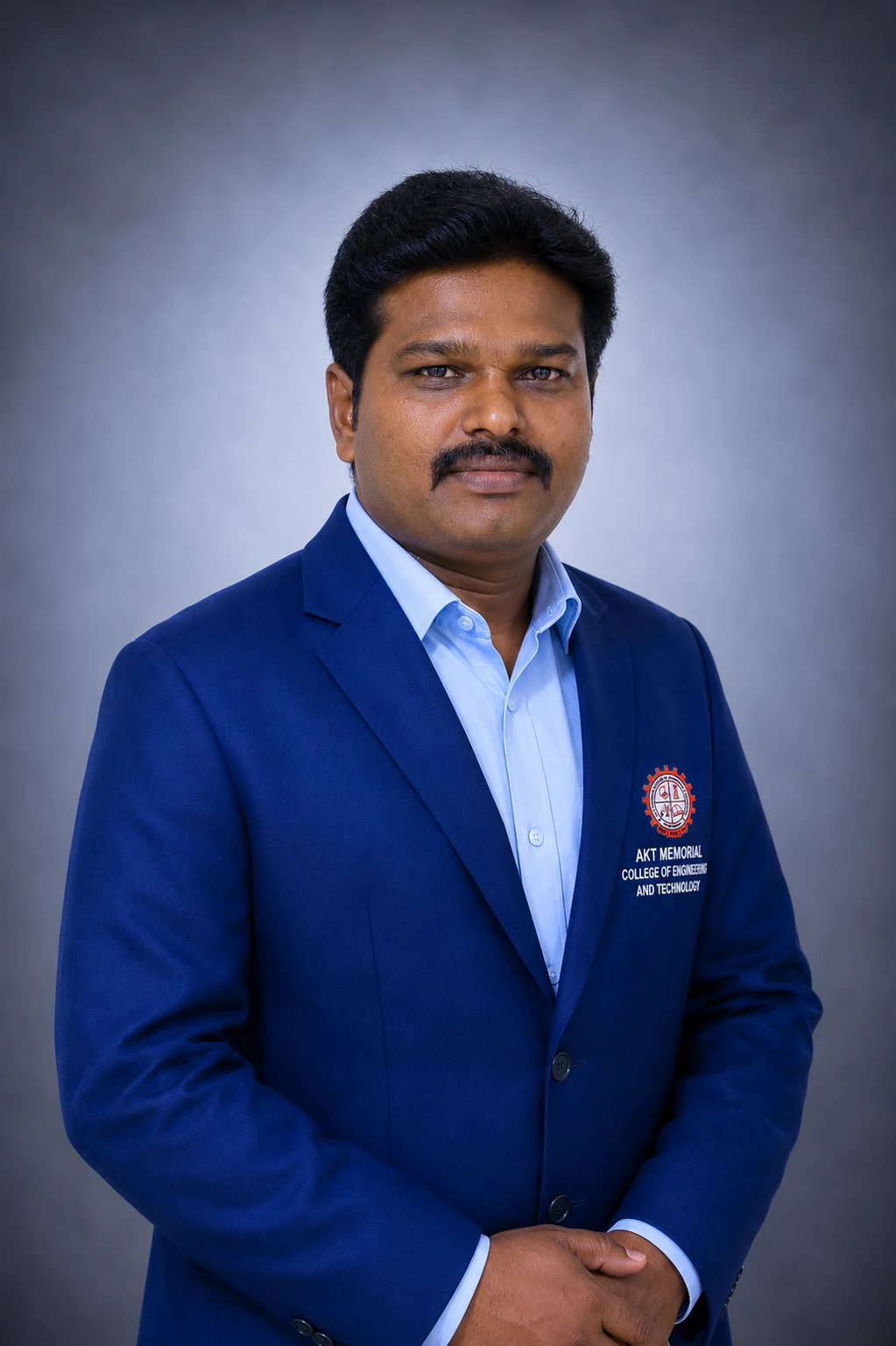
Dr. J. VENGADESH MARSHALL RAMAN

Assistant Professor & HoD

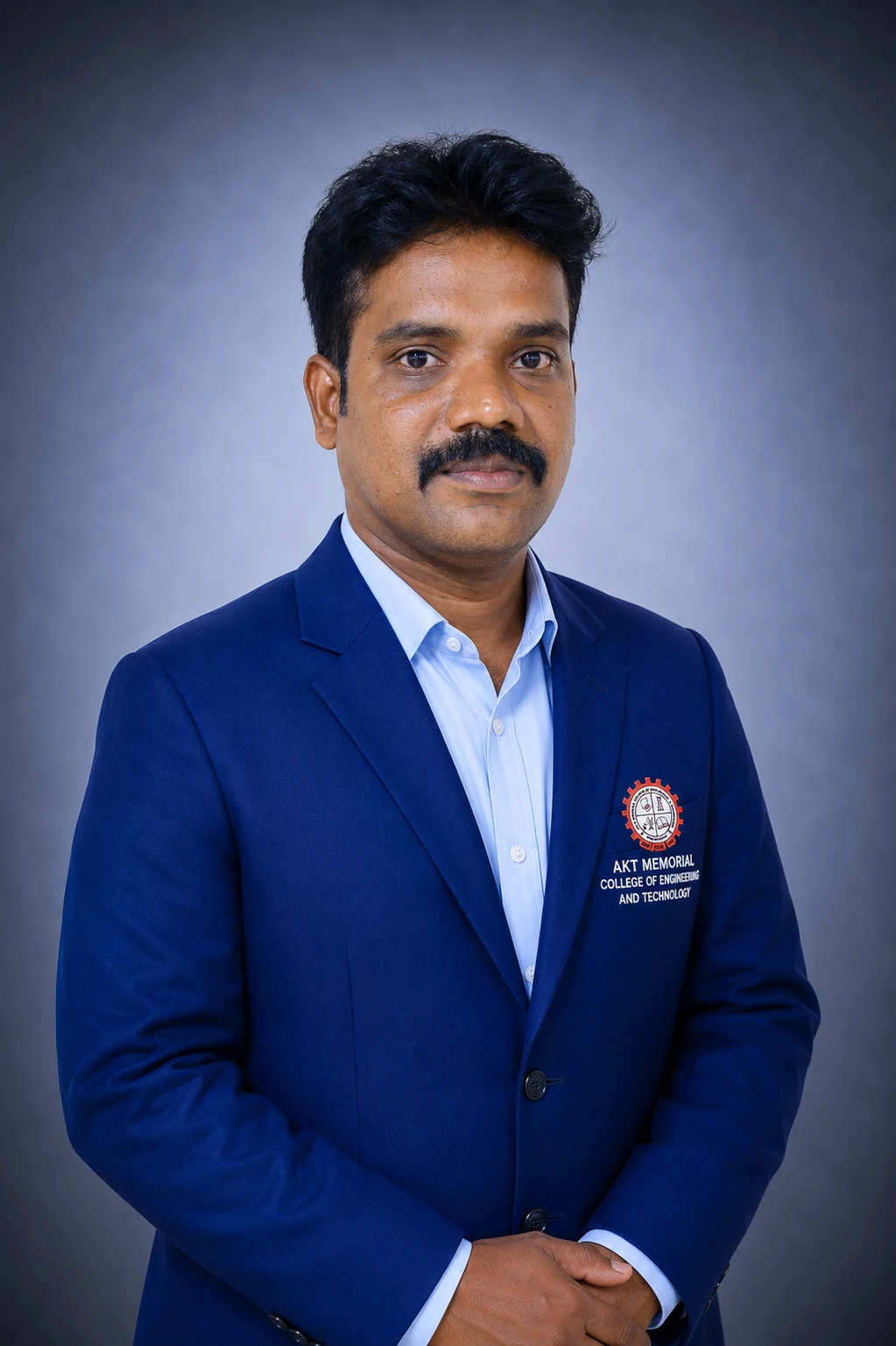
Mr. S. GULASEKARA PANDIYAN

Assistant Professor

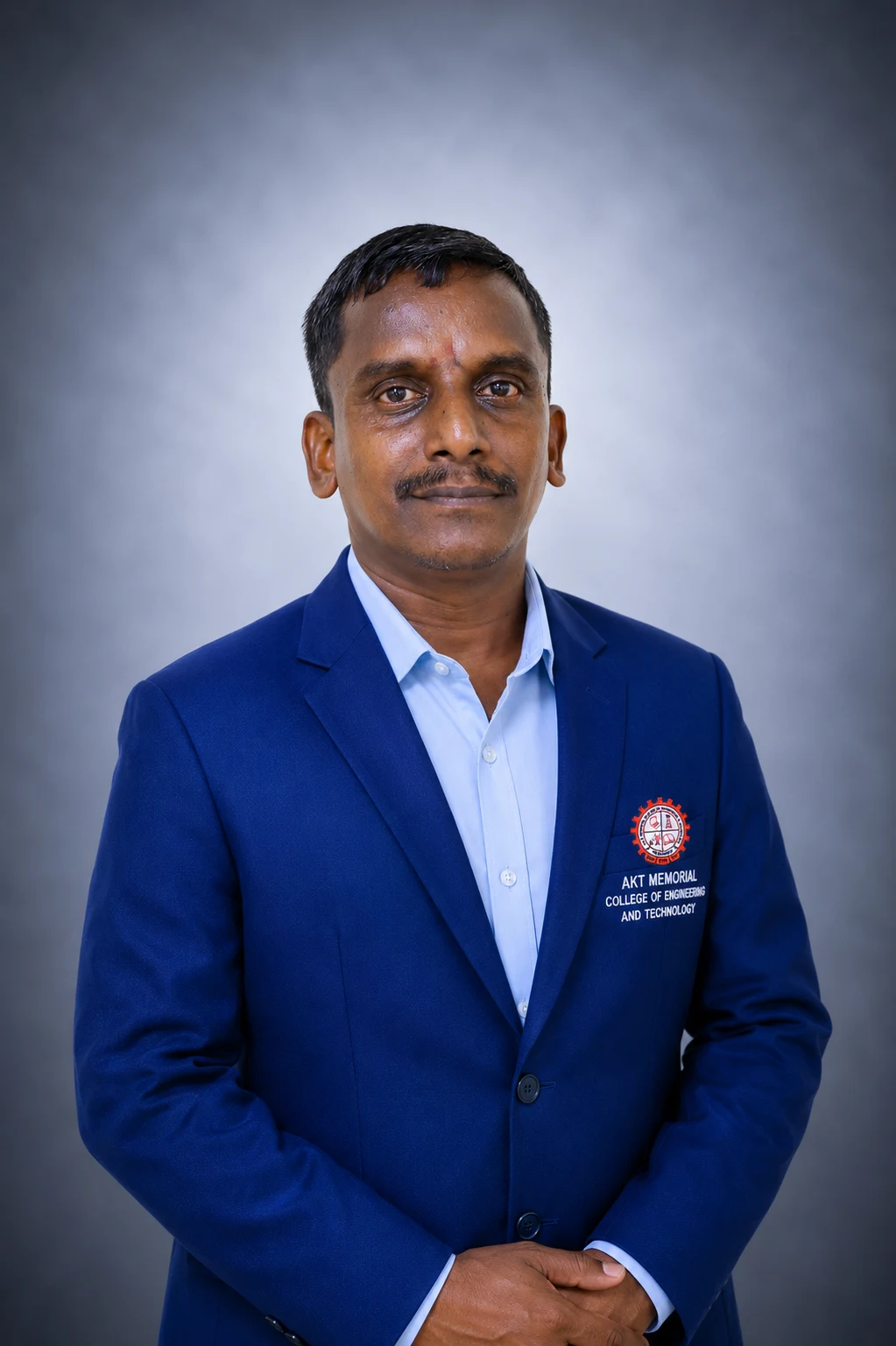
Mr. B. BALAMURTHI

Assistant Professor

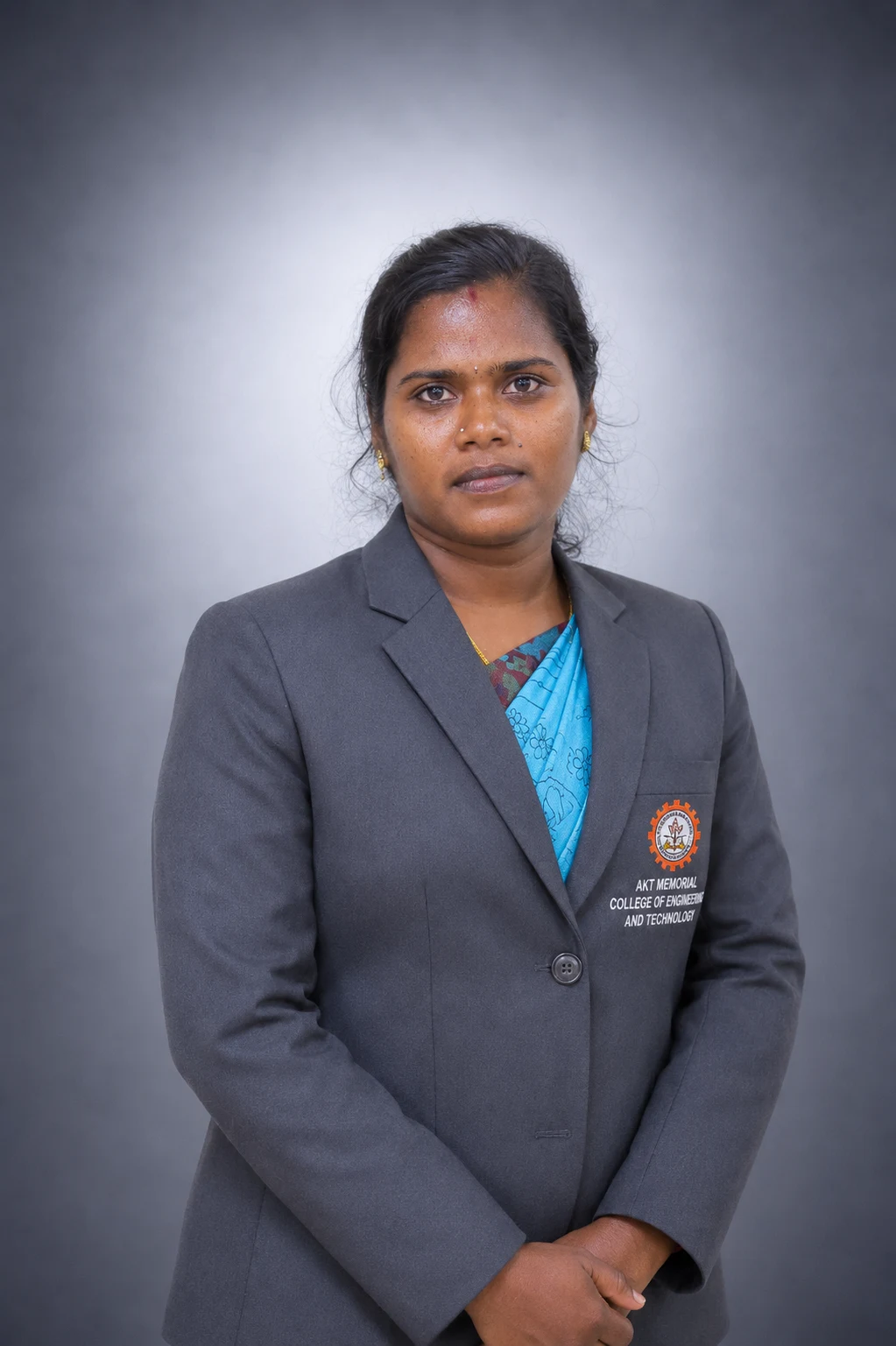
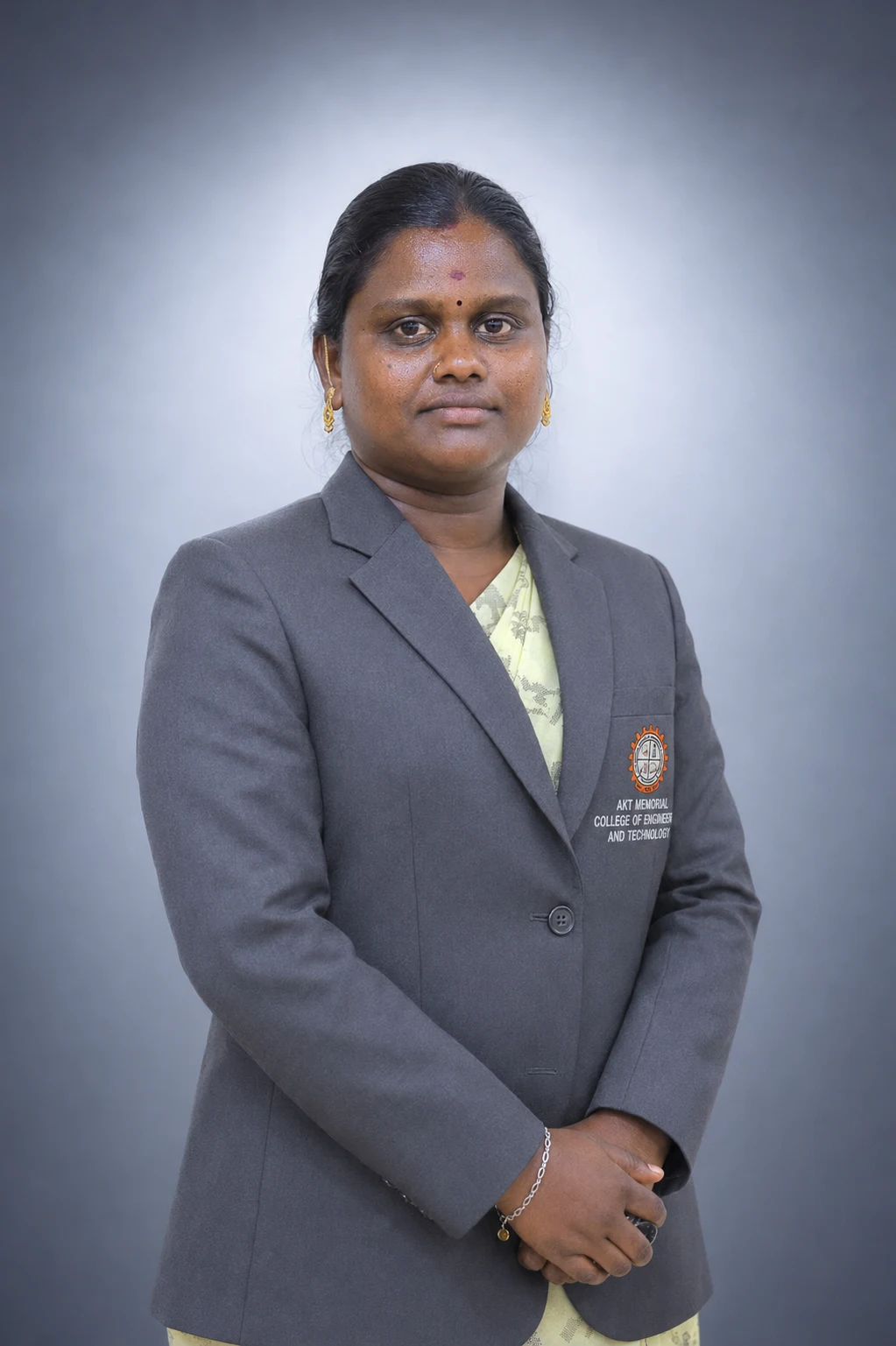
VINOTHINI

Assistant Professor

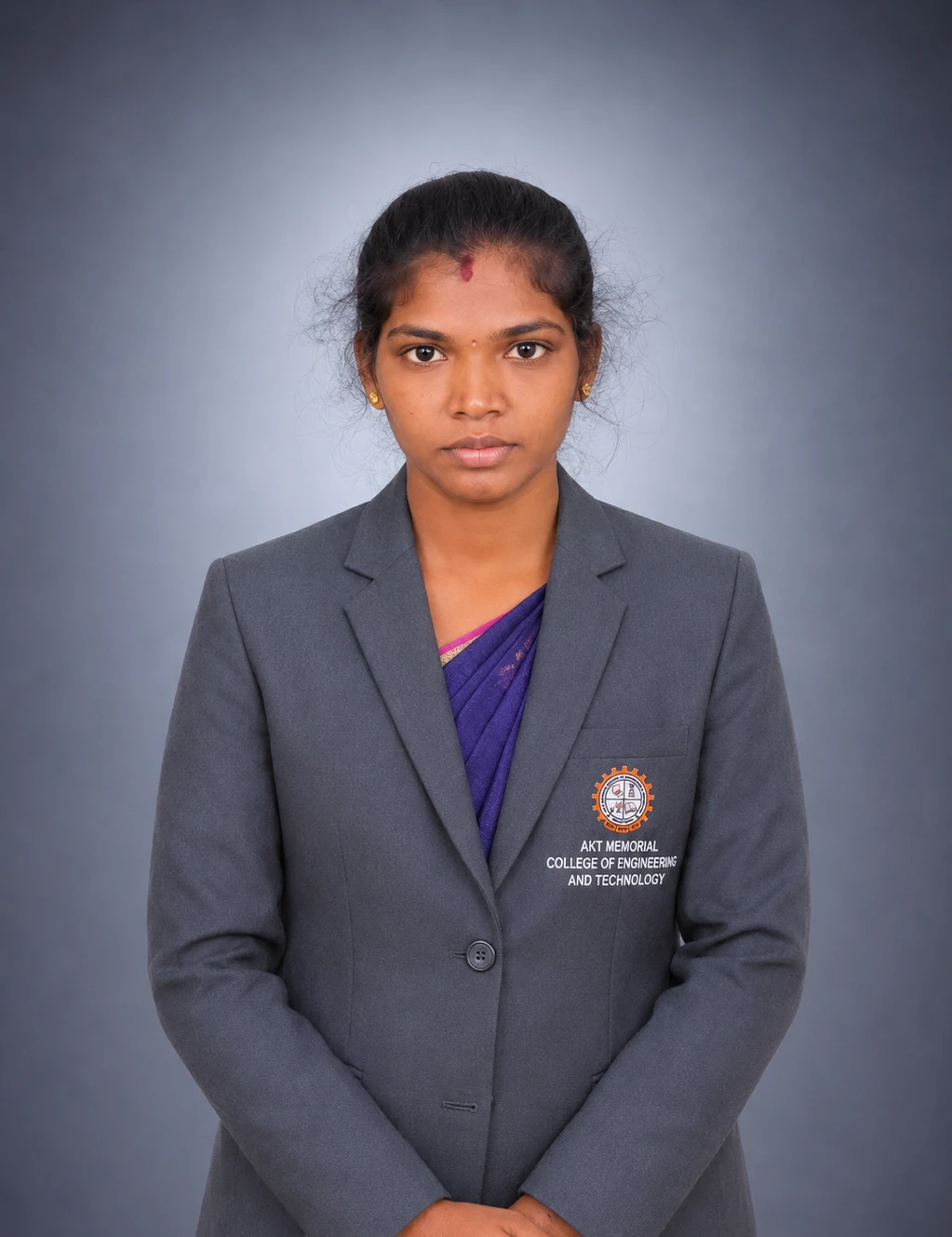
Mrs. V. SHANTHI

Assistant Professor

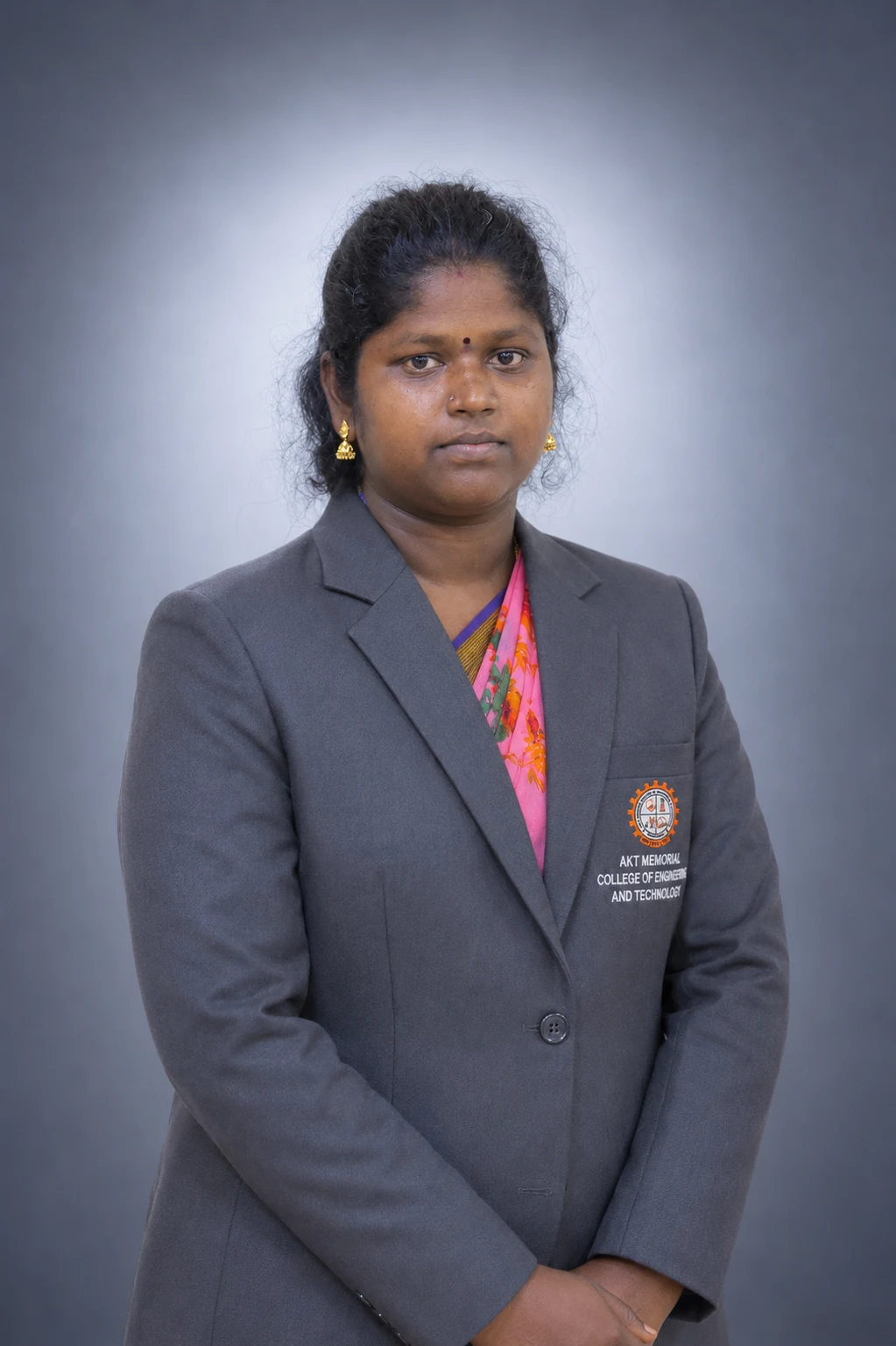
Mrs. P. SHEELA

Assistant Professor

Mrs. V. VAIDEHI

Assistant Professor
Activity

Activity Details

A.K.T MEMORIAL COLLEGE OF ENGINEERING AND TECHNOLOGY
DEPARTMENT OF CIVIL ENGINEERING – 3RD YEAR CIVIL
STUDENT CO – CURRICULAR ACTIVTIES & PARTICIPIATION DETAILS

S. No. Name of the Student Participation College / Industry Name Title Awards / Duration
1 Vasanth V Paper Presentation V.R.S College Of Engineering and Technology -------- One Day Participation
2 Jaya Prakash G Symposium A.K.T Memorial College of Engineering and Technology Short Film First Prize
One Day
3 Jaya Prakash G Workshop CADD Centre Kallakurichi -------- One Day
4 Jaya Prakash G Paper Presentation University College Of Engineering Panruti -------- One Day
5 Jaya Prakash G Symposium University College Of Engineering Panruti Short Film First Prize
One Day
6 Jayaprakash J
Abinaya M
Gomathi P
Vaidehi V
Vanish Kumar P
Workshop V.R.S College Of Engineering and Technology Science and Technology Capacity Building for Industrial Needs 3 Days Participation
7 Vaidehi V
Praveen Kumar D
Karthikeyan R
Yogeshwari R
Devi D
Poorniyammal A
Geethanjali M
Udhaya S
Abinaya M
Gomathi P
Jaya Prakash J
Vanish Kumar P
Symposium V.R.S College Of Engineering and Technology -------- One Day Participation
8 Vaidehi V Symposium University College Of Engineering Panruti CADD Quest One Day
9 Vaidehi V Paper Presentation M.A.M College Of Engineering, Tiruchirapalli --------- One Day
Events

Events