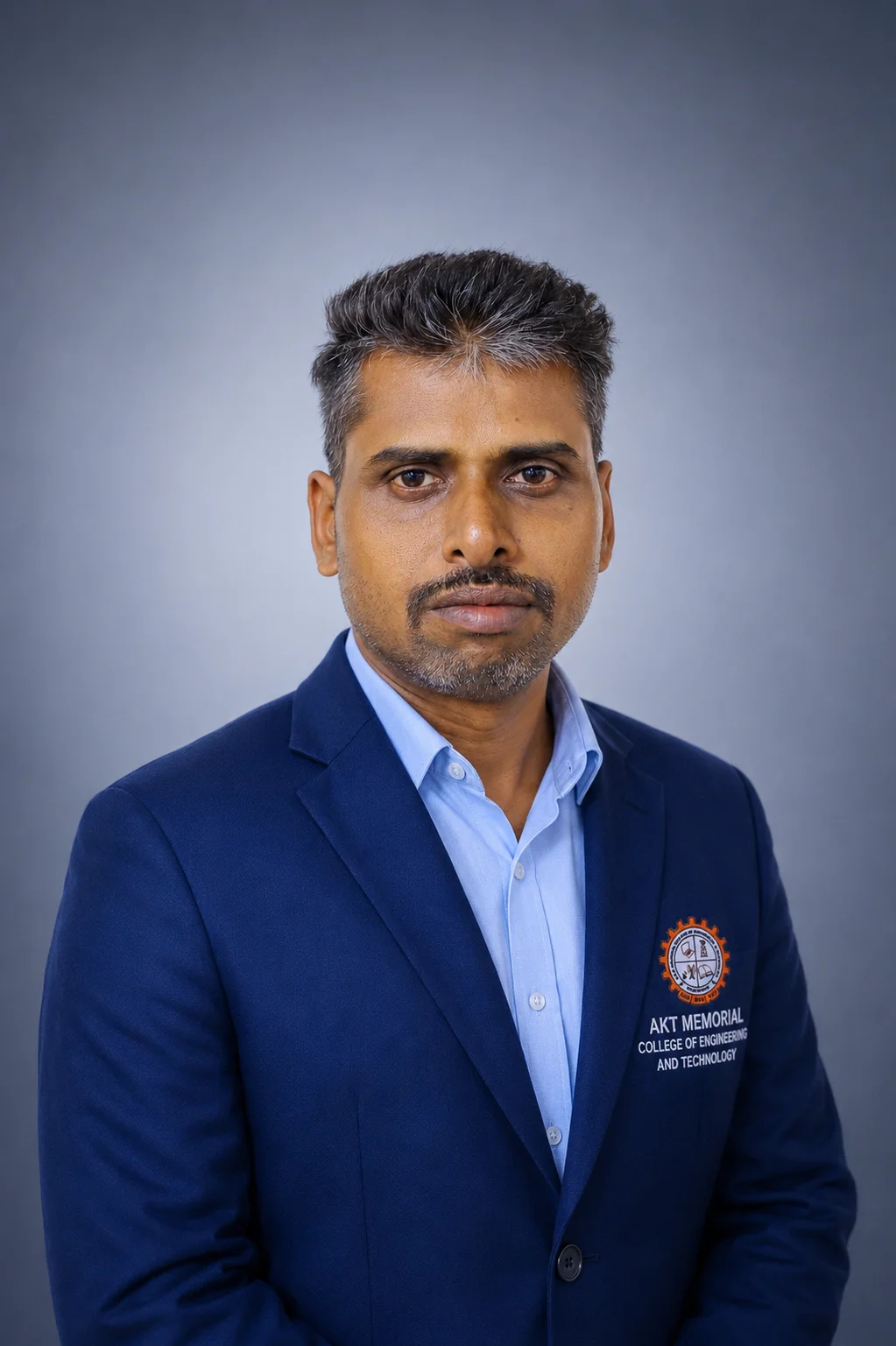
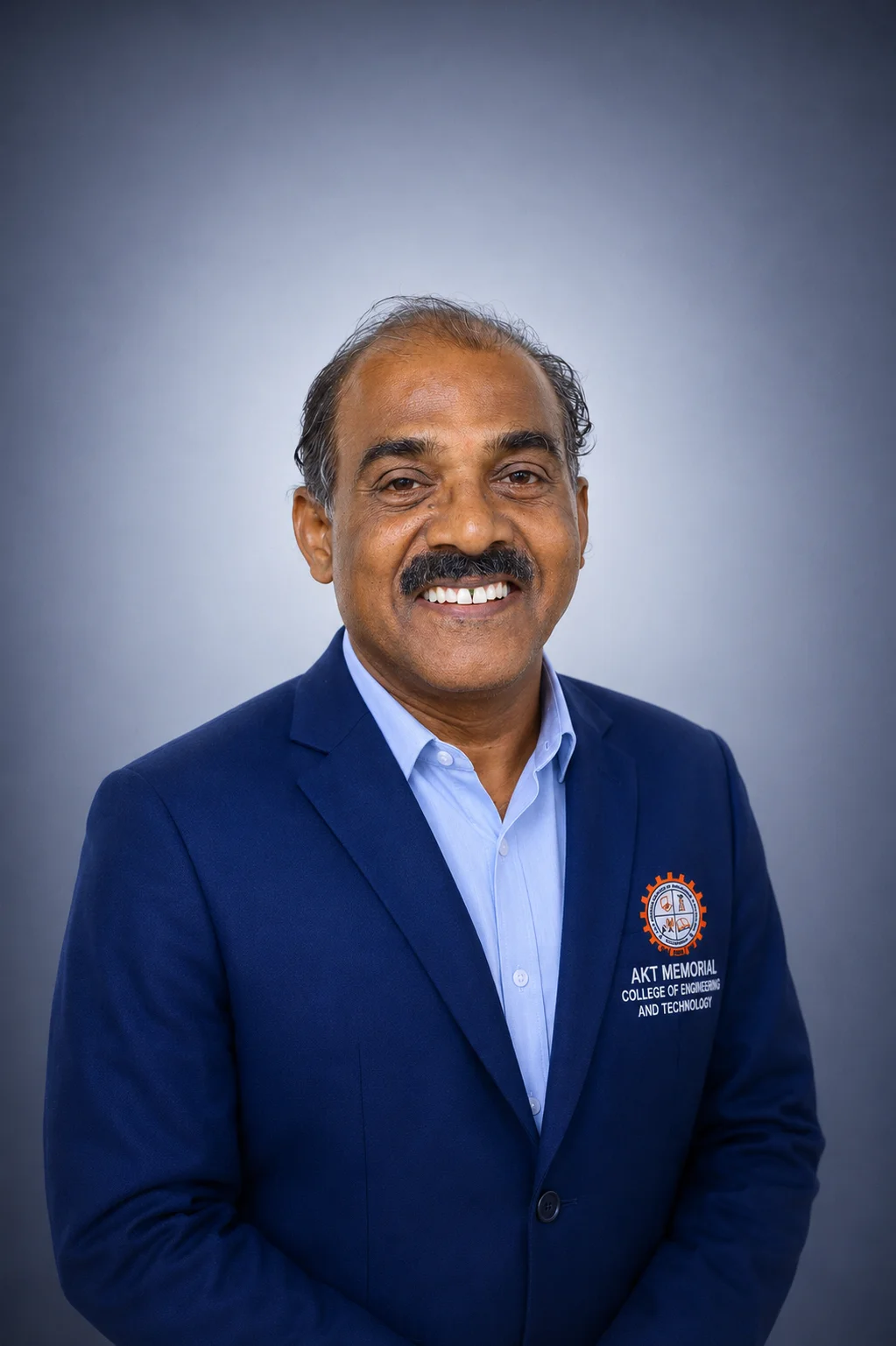
Department

About Department

About Department

The Mechanical Engineering Department was established in the year 2009. The department has always fostered an atmosphere conducive to the development of future engineers through the adoption of creative pedagogical approaches. The Mechanical Engineering Student Association (Federation of Luminous Aspiring Mechanical Engineers – FLAME) conducts career development programs to help students showcase their engineering skills. Students are encouraged to present their research and innovations at regional, national, and international conferences. Regular activities such as guest lectures, workshops, seminars, symposia, and career guidance programs are conducted to motivate students toward higher education and research. Students also gain practical exposure through mandatory industrial visits and internships. More than 800 students have graduated from this program.
Vision

The Department of Mechanical Engineering endeavors to be perceived all over the world for its exemplary education and research that leads to highly skilled engineers who are creative, ambitious, skillful and productive in advanced areas of engineering, research and entrepreneurship.

Mission

* To provide contemporary knowledge and tools, so that students are able to create, perceive, apply, and share knowledge. * Empowering the students with interdisciplinary knowledge and helping them to develop skills and values that will make them successful in the mechanical engineering field on a global scale.

PEOs

PROGRAM EDUCATIONAL OBJECTIVES (PEOs)

1. Effectuating success in careers by exploring with the design, digital and computational analysis of engineering systems, experimentation and testing, smart manufacturing, technical services, and research.

2. Amalgamating effectively with stakeholders to update and improve their core competencies and abilities to ethically compete in the ever-changing multicultural global enterprise.

3. To encourage multi-disciplinary research and development to foster advanced technology, and to nurture innovation and entrepreneurship in order to compete successfully in the global economy.

4. To globally share and apply technical knowledge to create new opportunities that proactively advances our society through team efforts and to solve various challenging technical, environmental and societal problems.

5. To create world class mechanical engineers capable of practice engineering ethically with a solid vision to become great leaders in academia, industries and society

PEOs

PROGRAM OUTCOMES (POs)

Engineering Outcomes
01
Engineering knowledge: Apply the knowledge of mathematics, science, engineering fundamentals, and engineering specialization to solve complex engineering problems.
02
Problem analysis: Identify, formulate, review research literature, and analyze complex engineering problems to reach substantiated conclusions using first principles of mathematics, natural sciences, and engineering sciences.
03
Design/development of solutions: Design solutions for complex engineering problems and design system components or processes that meet specified needs with consideration of public health, safety, cultural, societal, and environmental factors.
04
Conduct investigations of complex problems: Use research methods including design of experiments, analysis and interpretation of data, and synthesis of information to provide valid conclusions.
05
Modern tool usage: Create, select, and apply appropriate techniques, resources, and modern engineering and IT tools including prediction and modeling, with an understanding of limitations.
06
The engineer and society: Apply reasoning informed by contextual knowledge to assess societal, health, safety, legal, and cultural issues and responsibilities in engineering practice.
07
Environment and sustainability: Understand the impact of engineering solutions in societal and environmental contexts and demonstrate sustainable development awareness.
08
Ethics: Apply ethical principles and commit to professional ethics, responsibilities, and norms of engineering practice.
09
Individual and team work: Function effectively as an individual, and as a member or leader in diverse and multidisciplinary teams.
10
Communication: Communicate effectively with the engineering community and society through reports, documentation, presentations, and clear instructions.
11
Project management and finance: Demonstrate knowledge of engineering and management principles and apply them to manage projects effectively in multidisciplinary environments.
12
Life-long learning: Recognize the need for and engage in independent lifelong learning in the context of technological change.
PSOs

PROGRAM SPECIFIC OUTCOMES

1 Apply the knowledge gained in Mechanical Engineering for design and development and manufacture of engineering systems.

2 Apply the knowledge acquired to investigate research-oriented problems in mechanical engineering with due consideration for environmental and social impacts.

3 Use the engineering analysis and data management tools for effective management of multidisciplinary projects

COs

To View COs Details Click Here

Lab

Our Laboratory Facilities

Mechanical Lab Details

CAD & Modeling Laboratory

Practice operations in lathe, drilling, milling machines and gain industry-level drafting skills.

Equipments

Pentium systems, graphics setup, printer/plotter

Software

AutoCAD, Think3

Manufacturing Technology Lab – I

Develop skills to create 2D and 3D models using machining tools.

Equipments

Lathe, Milling Machine, Shaper

Manufacturing Technology Lab – II

Study advanced machining operations and real-world manufacturing applications.

Equipments

CNC machines, grinding machines, drilling, gear machines

Thermal Engineering Lab – I

Study IC engine performance, fuel characteristics, and steam systems.

Equipments

IC engines, diesel engines, steam boiler setup

Thermal Engineering Lab – II

Analyze heat transfer and refrigeration systems.

Equipments

Heat transfer apparatus, refrigeration & AC test rigs

Dynamics Laboratory

Understand machinery dynamics and vibration testing.

Equipments

Gyroscope, vibration setup, balancing machine

Metrology & Measurements Lab

Learn precision measurement and quality inspection techniques.

Equipments

Micrometer, Vernier, CMM, surface tester

CAD / CAM Laboratory

Learn CNC machining, modeling, and rapid prototyping.

Equipments

CNC Lathe, Milling Machine

Software

SolidWorks

Simulation & Analysis Lab

Analyze engineering problems using simulation tools.

Equipments

Workstations, printers

Software

ANSYS

Mechatronics Laboratory

Study microcontrollers, hydraulics, pneumatics, and automation systems.

Equipments

PLC kits, hydraulic & pneumatic trainers, microcontroller kits

Software

LabVIEW

Faculty Details

Meet our faculty members
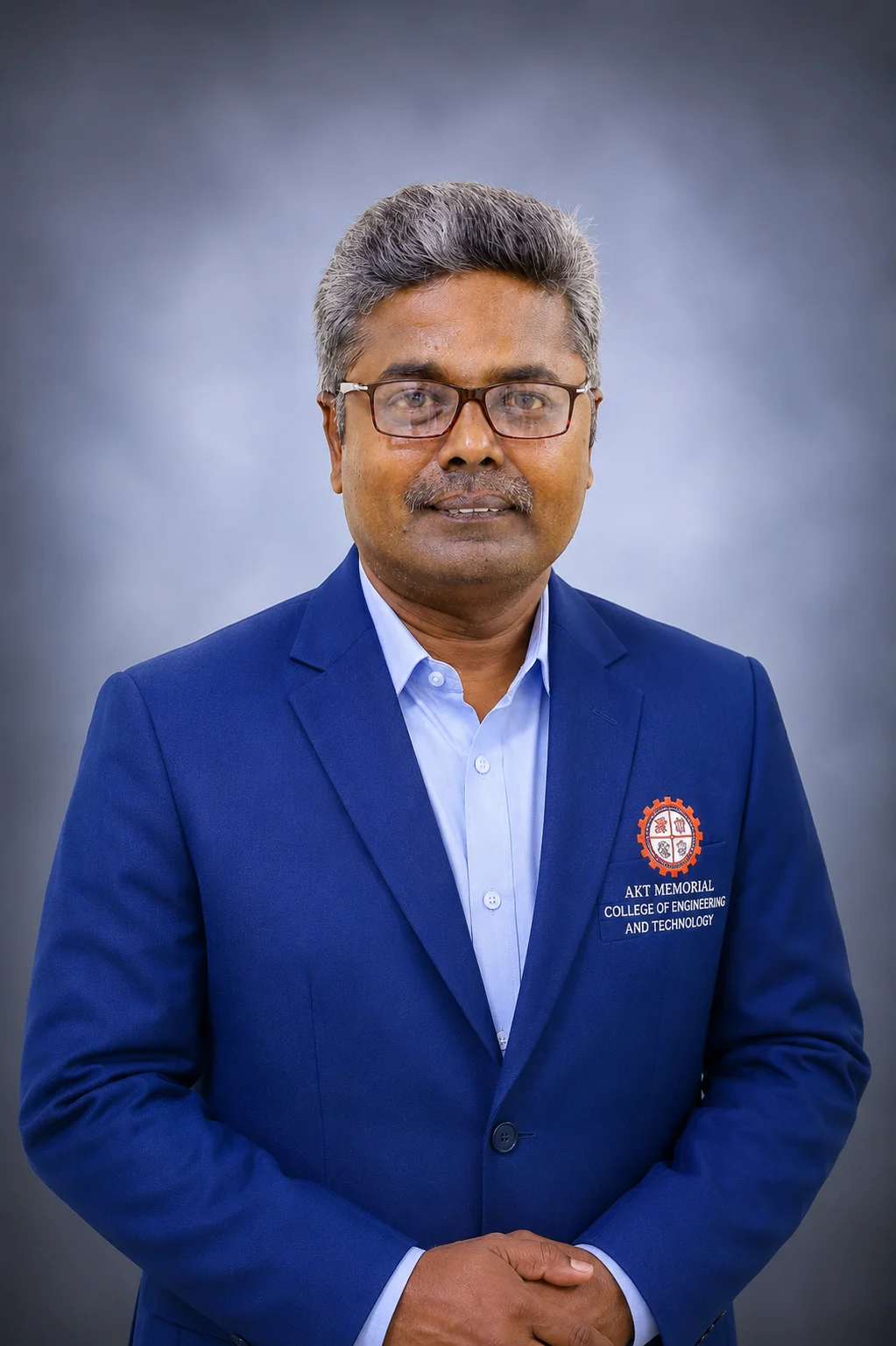
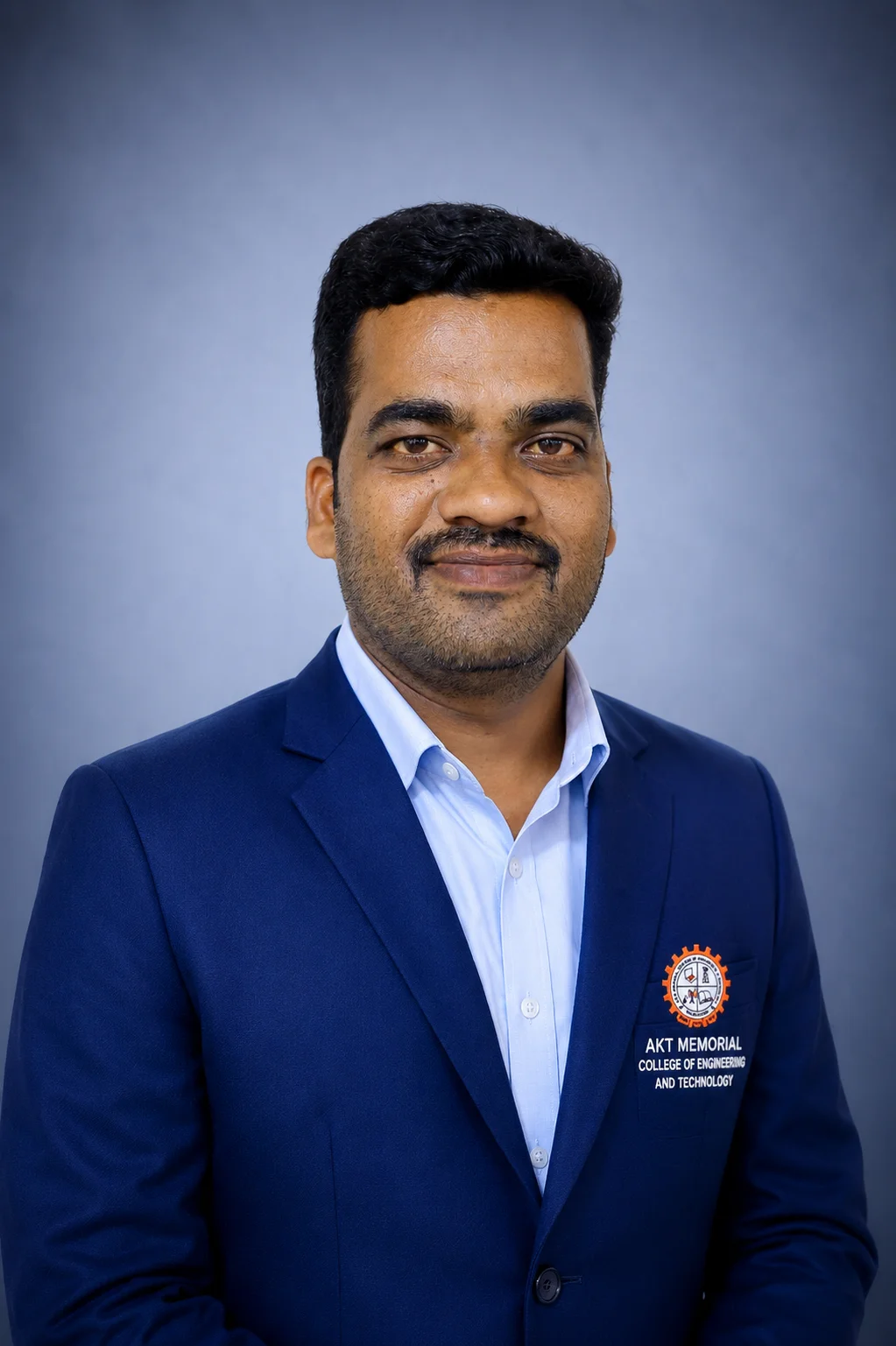
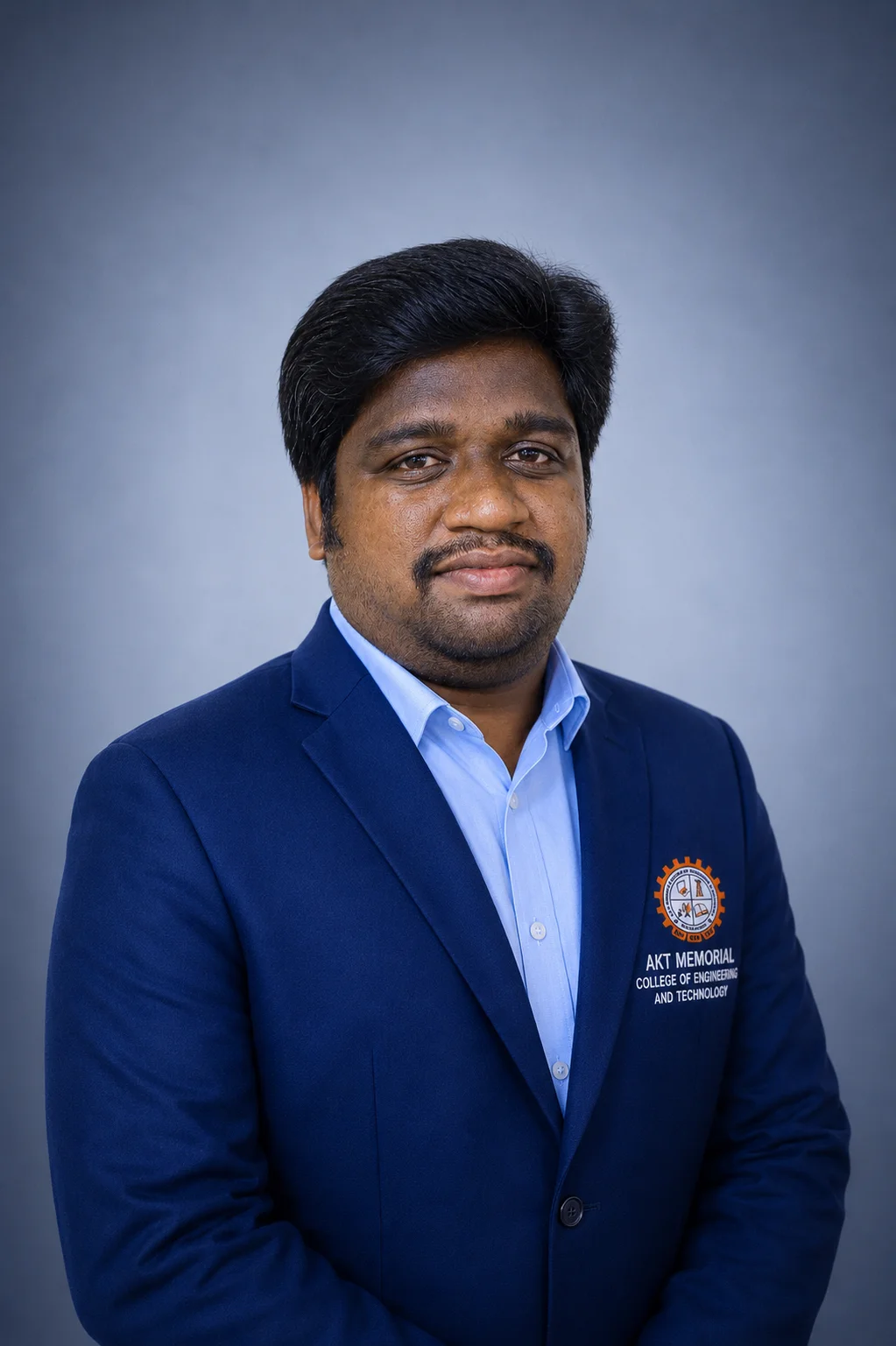
Dr. S. SIVAKUMAR
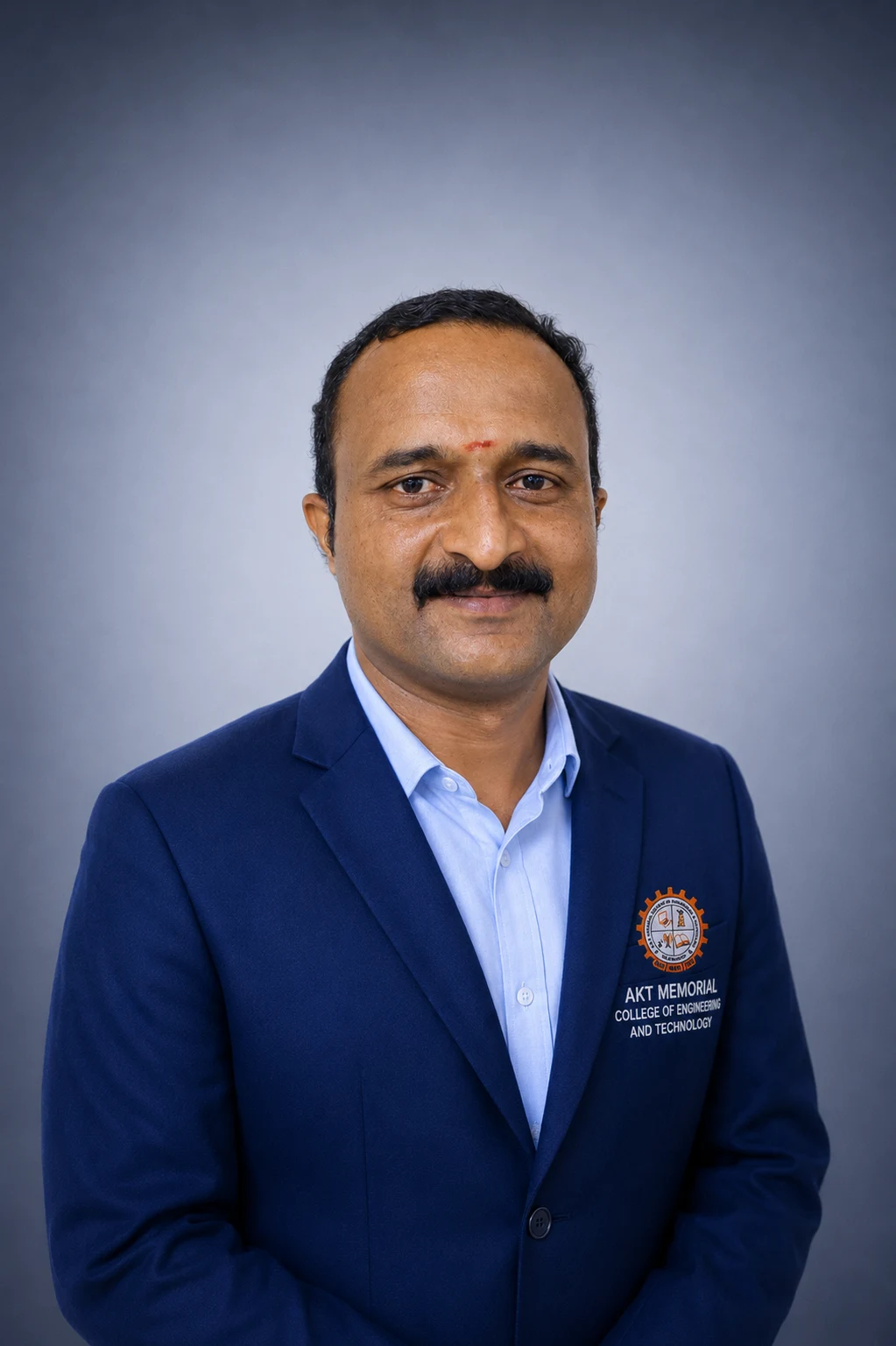
Professor & HoD

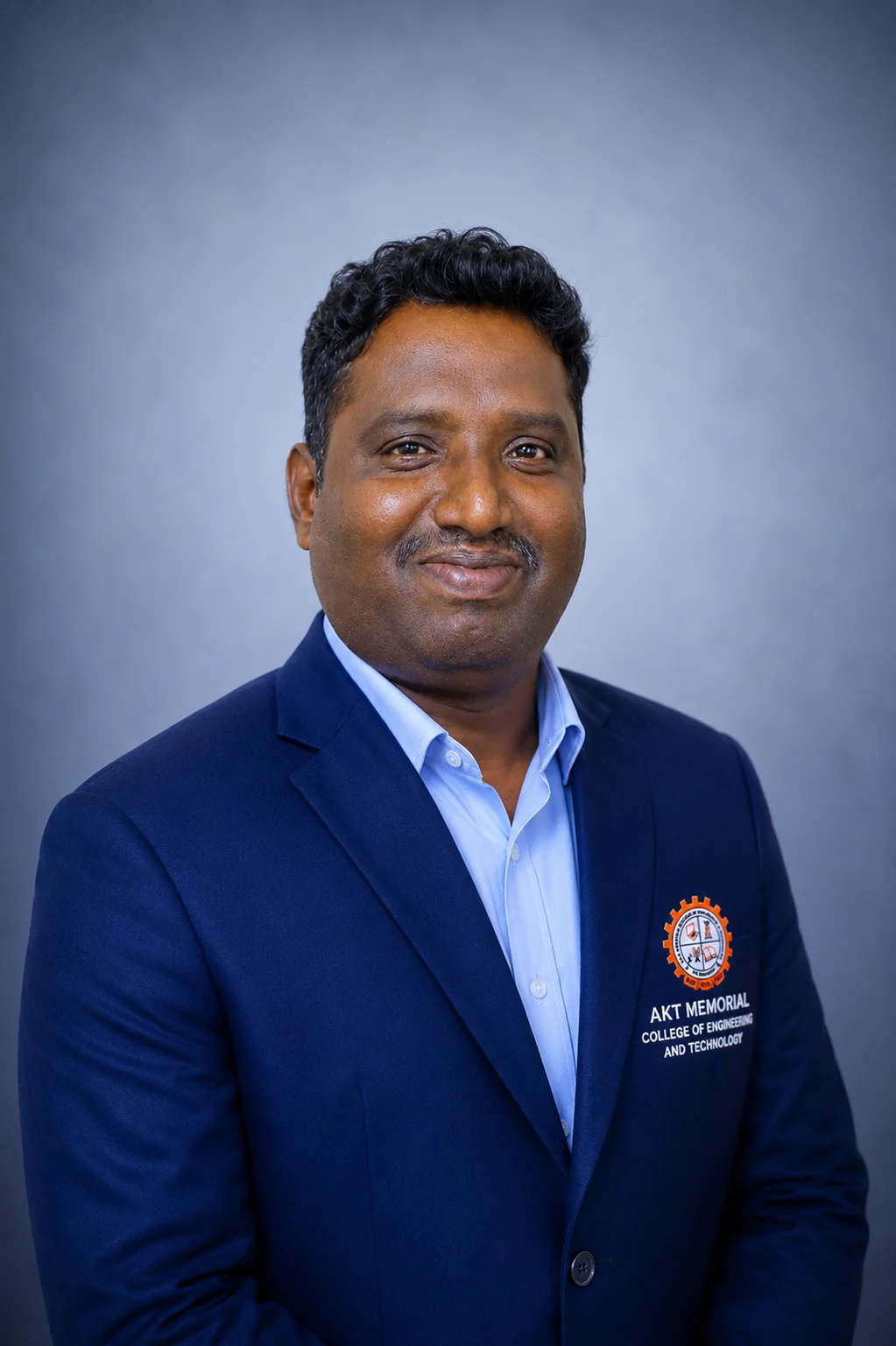
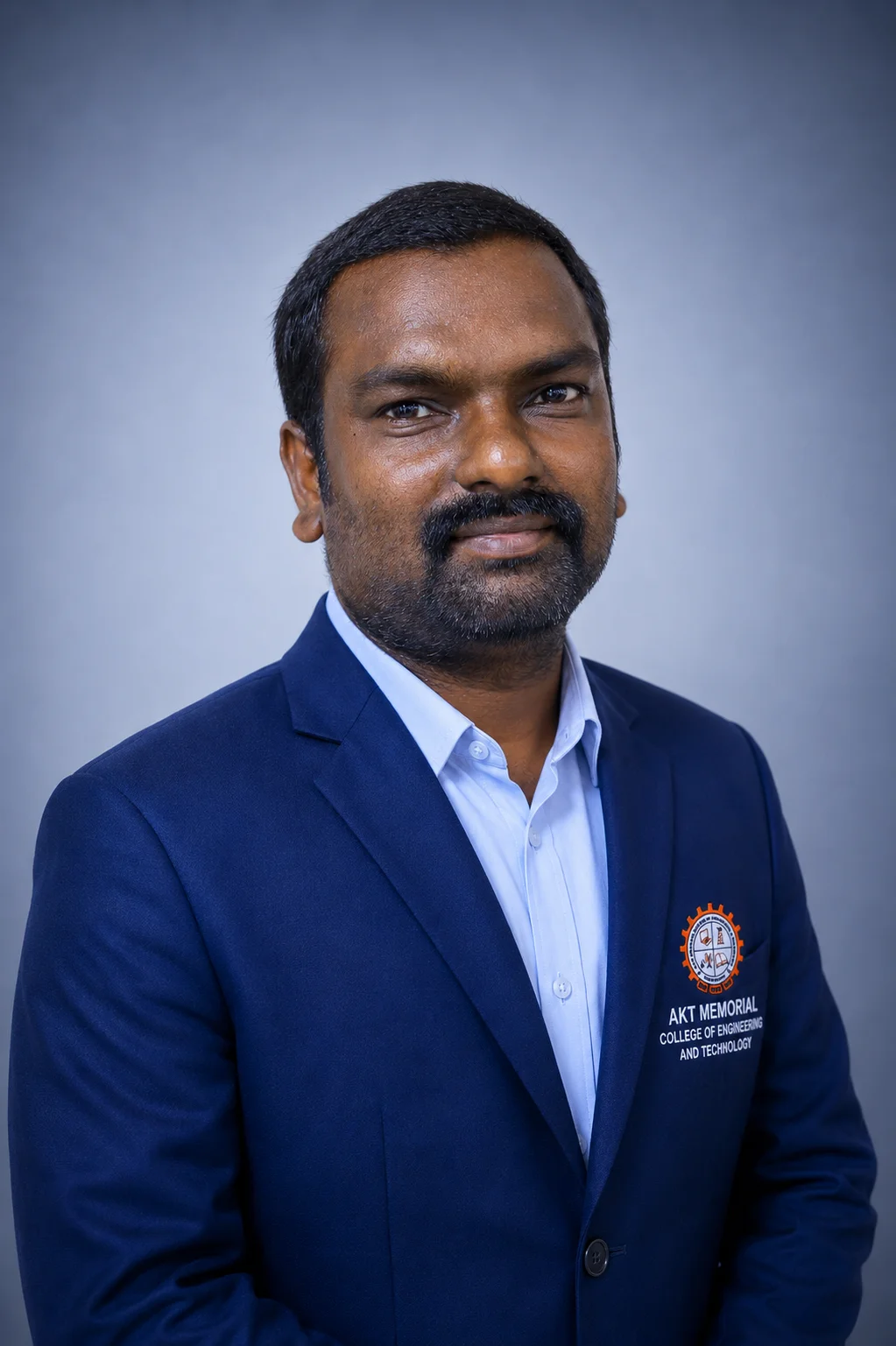
Mr. K. MANIKANDAN

Assistant Professor

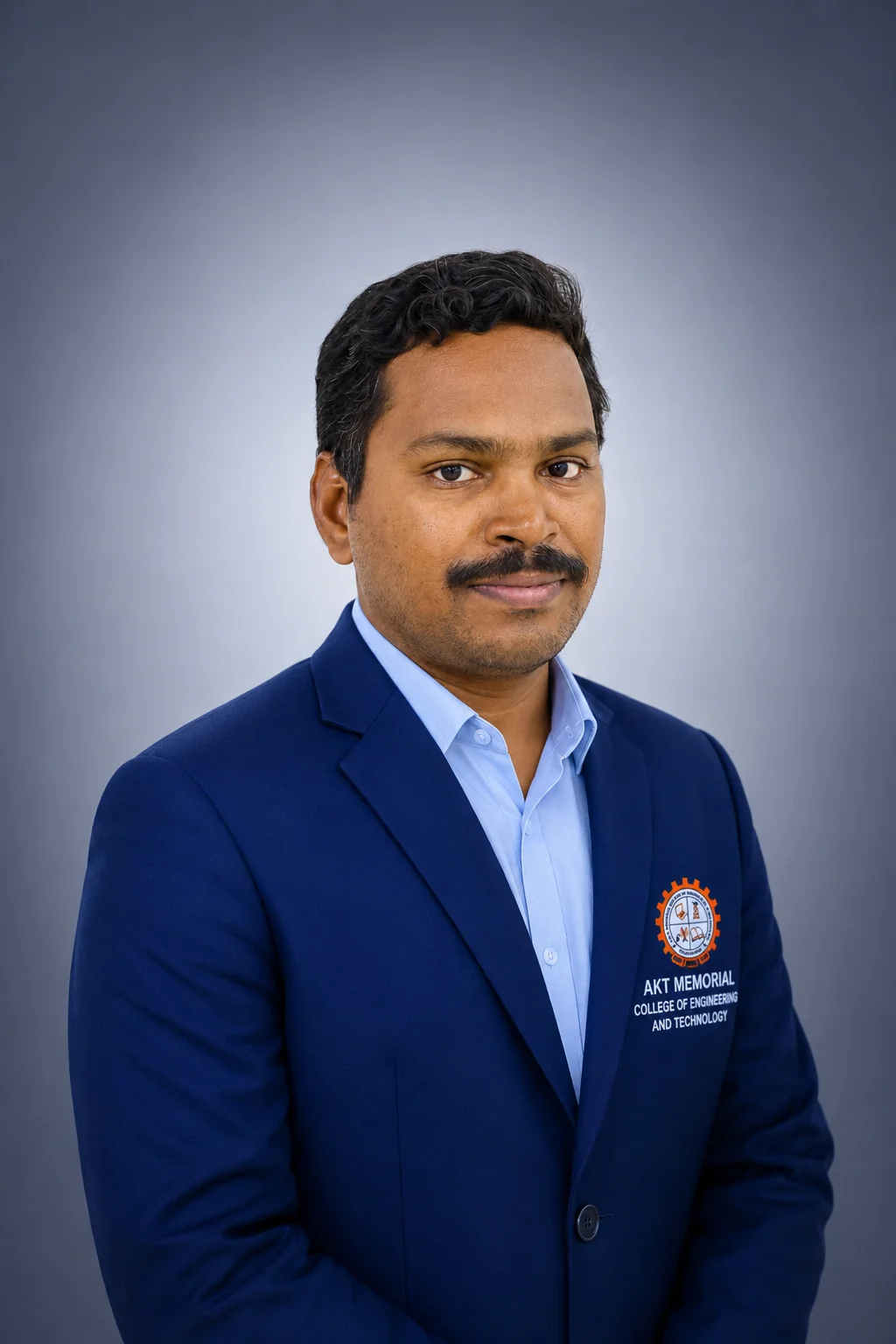
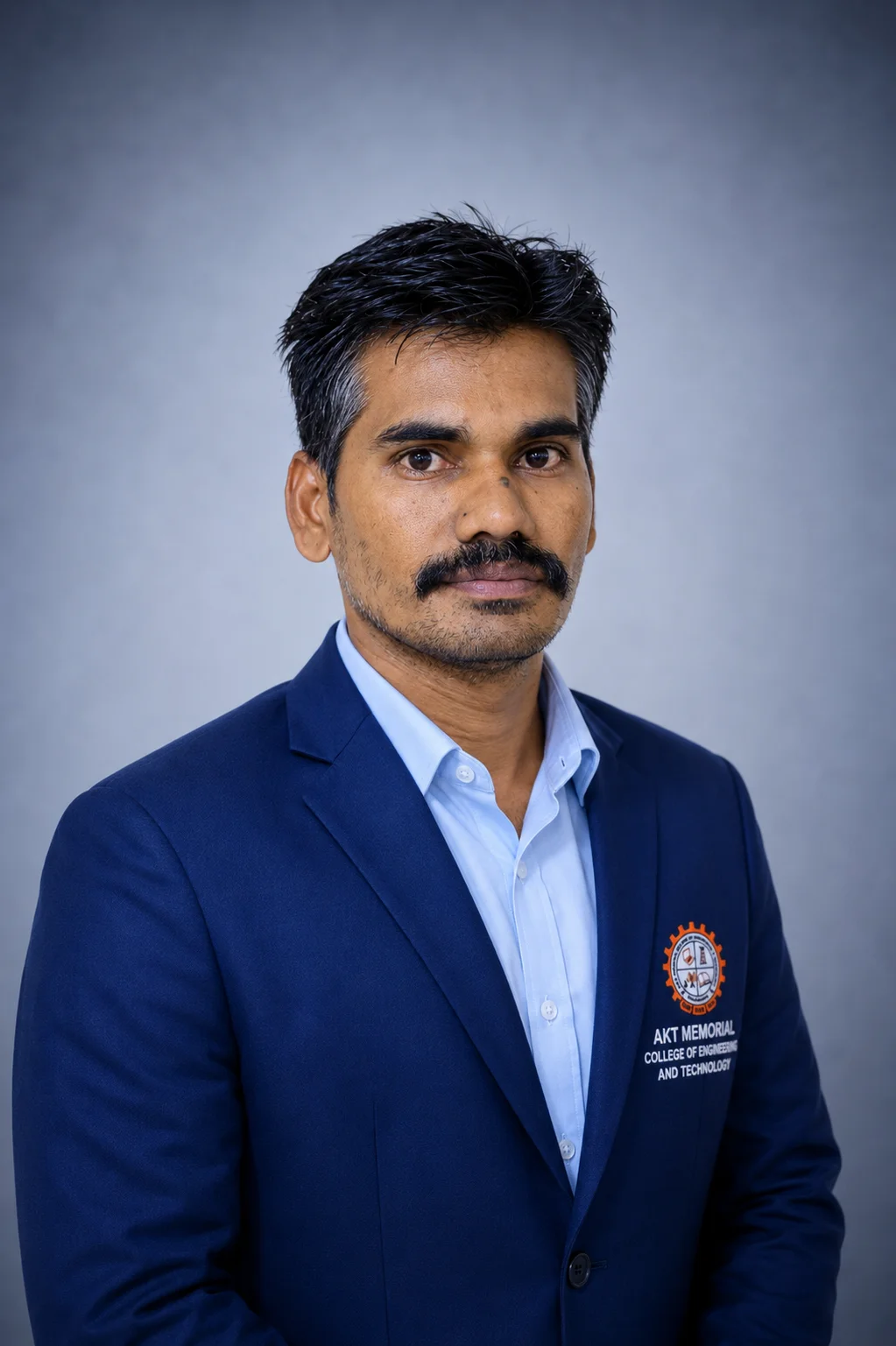
Mr. R. ASHOKKUMAR

Assistant Professor

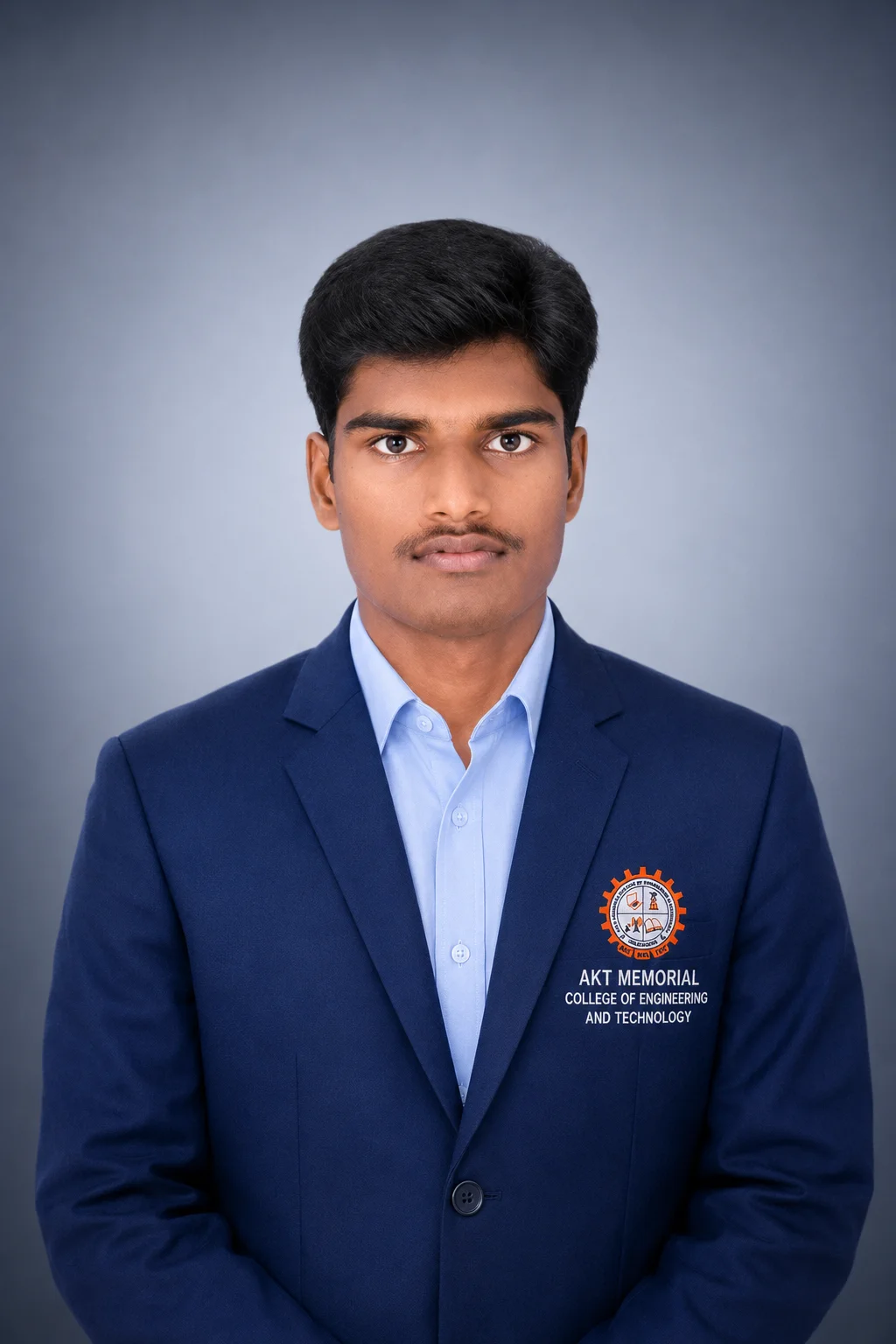
Mr. A. SATHYARAJ

Assistant Professor

Mr. V. VIGNESH

Assistant Professor

Mr. S. DURAIRAJ

Assistant Professor

Mr. A. BALAMURUGAN

Assistant Professor

Mr. K. PALANIAPPAN

Assistant Professor

Mr. J. BALAMURUGAN

Assistant Professor

Mr. K.K . PONSENTHIL

Assistant Professor

Mr. L. NARAYANAN

Assistant Professor

DR. P. GOVINDAN

Assistant Professor
Activity

Activity Details

A.K.T MEMORIAL COLLEGE OF ENGINEERING AND TECHNOLOGY
DEPARTMENT OF MECHANICAL ENGINEERING
STUDENT CO – CURRICULAR ACTIVTIES & PARTICIPIATION DETAILS

S. No. Name of the Student Participation College Award / Duration
1
  • Asai Thambi E
  • Arivazhagan S
Workshop VRS College of Technology One Day Participation
2
  • Muruganantham L
  • Mukilvanan M
Paper Presentation Tagore College of Engineering One Day Participation
3
  • Sathyaraj M
  • Veerasamy A
  • Ajith V
  • Sathish Kumar A
  • Sandhanabarathi K
Paper Presentation SSN College of Engineering and Technology One Day Participation
4
  • Jagadeesh R
  • Gokul S
Paper Presentation Anna University One Day Participation
5
  • Vinoth S
  • Veerasamy A
  • Uthamakumar P
  • Sandhanabarathi K
  • Sathish Kumar A
  • Vimal G
Workshop VRS College of Technology One Day Participation
6
  • John Paul A
  • Elangovan R
  • Kaviyarasan V
  • Asai Thambi E
Paper Presentation SRM Institute of Technology Participation
7
  • Sarathkumar B
  • Venkatesa Perumal M
  • Saravanan M
Paper Presentation SSN College of Engineering and Technology One Day Participation
8
  • Pradeep M
  • Sarathkumar B
Workshop Kongu College of Engineering One Day Participation
9
  • Vijay B
  • Suresh K
Paper Presentation Arunai College of Engineering and Technology One Day Participation
10
  • Muruganantham L
  • Ragupathy S
Paper Presentation Tagore College of Engineering One Day Participation