Department

About Department

About Department

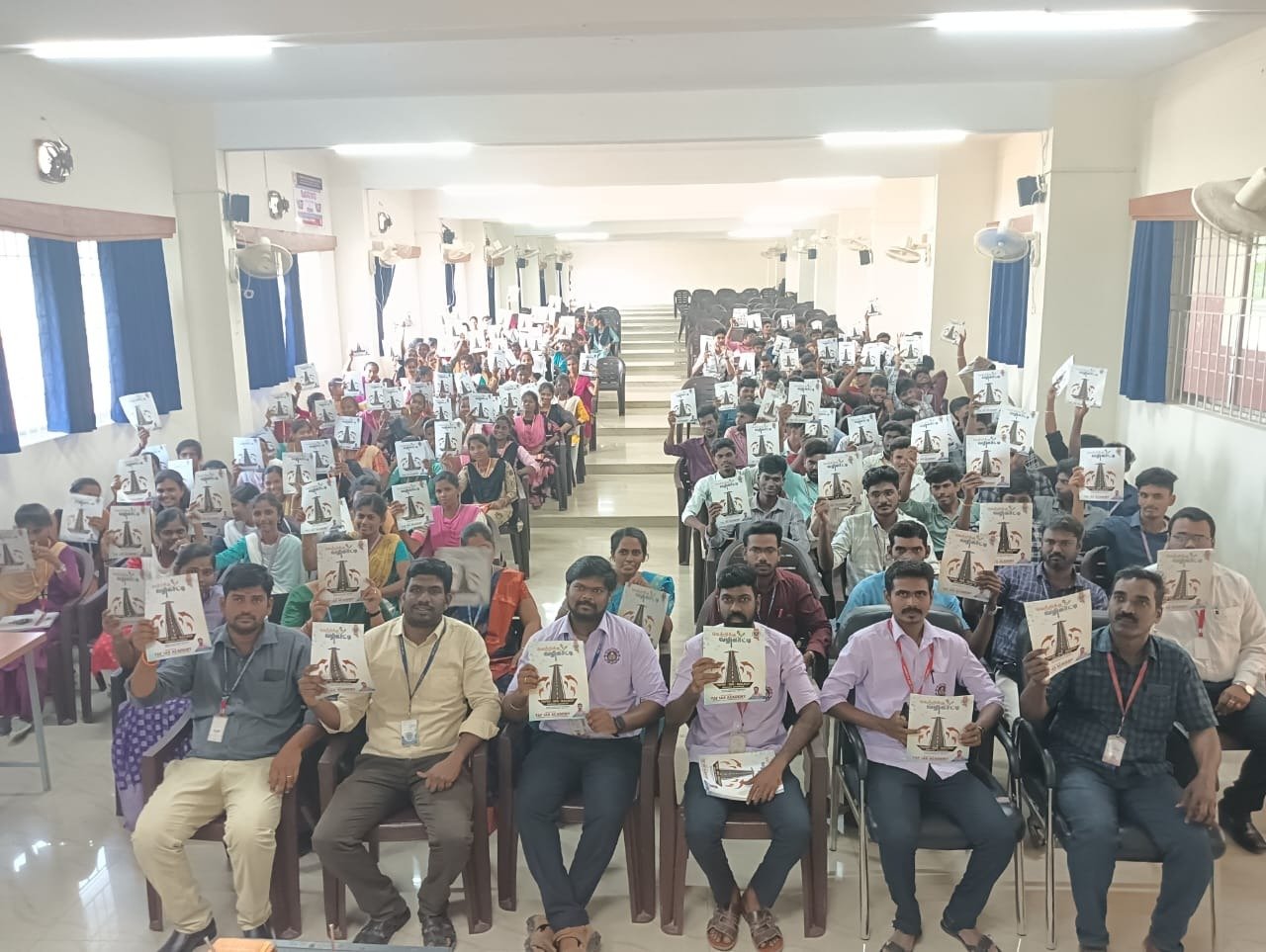
The Department of Electronics and Communication Engineering was established in the year 2010 with the vision of developing the department as a Center of Excellence in the field of Electronics and Communication Engineering and to make students blossom into meritorious and self-disciplined professionals. The department has well-qualified, experienced teaching faculty and supporting staff to impart knowledge and skills effectively. It conducts national level technical symposiums every year for students and also organizes faculty development programs, guest lectures, seminars, workshops, skill development programs, and industrial visits to enhance students’ technical skills and industry exposure. We also encourage students to participate in sports, cultural activities, and other extracurricular events. The overall focus of the department is to:
  • Emphasize fundamental knowledge of the subjects.
  • Provide exposure to emerging technologies.

Vision

“To excel in technical education and research in the area of Electronics and Communication Engineering and to produce innovative, skilled and competent individuals with ethical and human values to meet the future challenges of the society”.

Mission

Provide strong technical knowledge through effective teaching Encourage innovation, creativity, and research Involve students in activities through clubs and organizations

PEOs

PROGRAM EDUCATIONAL OBJECTIVES

1. To enable graduates to pursue research, or have a successful career in academia or industries associated with Electronics and Communication Engineering, or as entrepreneurs.

2. To provide students with strong foundational concepts and also advanced techniques and tools in order to enable them to build solutions or systems of varying complexity.

3. To prepare students to critically analyze existing literature in an area of specialization and ethically develop innovative and research oriented methodologies to solve the problems identified.

PSOs

PROGRAM SPECIFIC OUTCOMES

1. To analyze, design and develop solutions by applying foundational concepts of Electronics and communication engineering.

2. To apply design principles and best practices for developing quality products for scientific and business applications.

3. To adapt to emerging information and communication technologies (ICT) to innovate ideas and solutions to existing/novel problems.

PEOs

PROGRAM OUTCOMES (POs)

Engineering Outcomes
01
Engineering knowledge: Apply the knowledge of mathematics, science, engineering fundamentals, and an engineering specialization to the solution of complex engineering problems.
02
Problem analysis: Identify, formulate, review research literature, and analyze complex engineering problems reaching substantiated conclusions using first principles of mathematics, natural sciences, and engineering sciences.
03
Design/development of solutions: Design solutions for complex engineering problems and design system components or processes that meet the specified needs with appropriate consideration for the public health, safety, and cultural, societal, and environmental considerations.
04
Conduct investigations of complex problems: Use research-based knowledge and research methods including design of experiments, analysis and interpretation of data, and synthesis of information to provide valid conclusions.
05
Modern tool usage: Create, select, and apply appropriate techniques, resources, and modern engineering and IT tools including prediction and modeling to complex engineering activities with an understanding of the limitations.
06
The engineer and society: Apply reasoning informed by contextual knowledge to assess societal, health, safety, legal and cultural issues and responsibilities relevant to engineering practice.
07
Environment and sustainability: Understand the impact of engineering solutions in societal and environmental contexts and demonstrate the knowledge and need for sustainable development.
08
Ethics: Apply ethical principles and commit to professional ethics and responsibilities and norms of engineering practice.
09
Individual and team work: Function effectively as an individual, and as a member or leader in diverse and multidisciplinary teams.
10
Communication: Communicate effectively on complex engineering activities with the engineering community and society through reports, documentation, presentations, and clear instructions.
11
Project management and finance: Demonstrate knowledge and understanding of engineering and management principles and apply them to manage projects in multidisciplinary environments as a member or leader.
12
Life-long learning: Recognize the need for and have the ability to engage in independent and life-long learning in the broadest context of technological change.

COs

To View COs Details Click Here

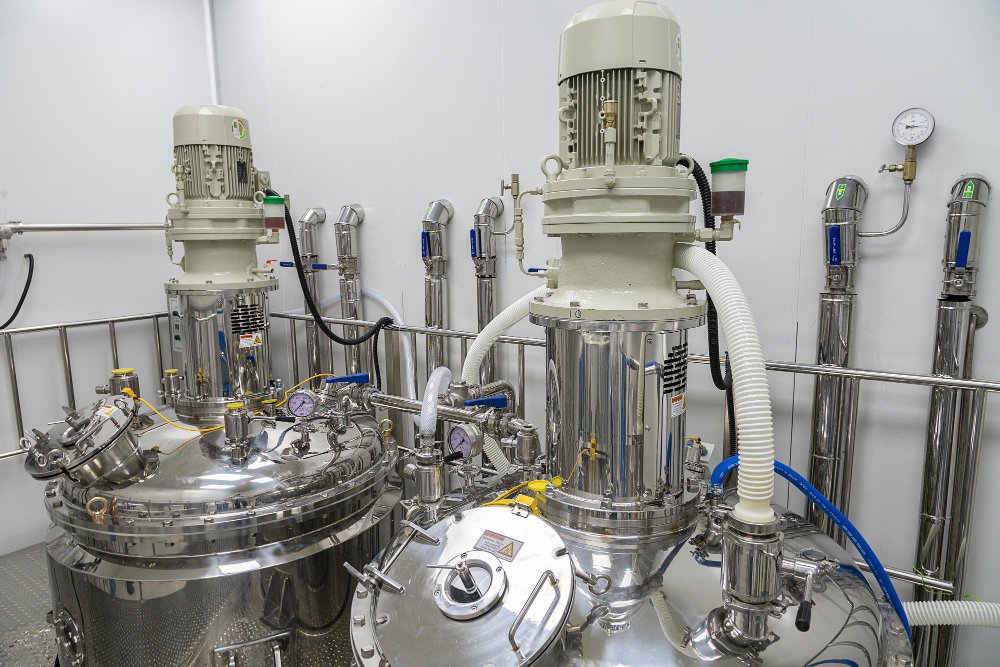
Lab

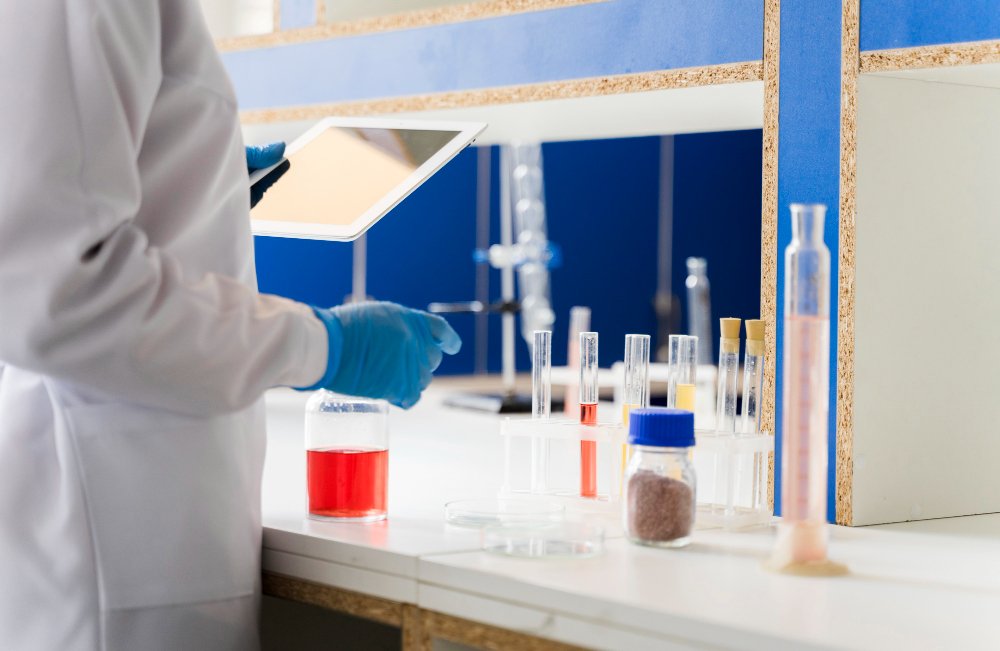
Our Laboratory Facilities

Electronics Lab Details

Electronics Circuits Lab

  • Be exposed to characteristics of basic electronic devices
  • Be exposed to RL and RC circuits
  • Understand Thevenin & Norton theorem, KVL, KCL, and Superposition

Digital Electronics Lab

  • Learn methods for simplifying Boolean expressions
  • Understand combinational and sequential circuits
  • Study synchronous and asynchronous circuits

Digital Signal Processing Lab

  • Implement linear and circular convolution
  • Design IIR and FIR filters
  • Study DSP processor architecture
  • Understand finite word length effects

Computer Networks Laboratory

  • Learn communication between computers
  • Implement different protocols
  • Understand socket programming and routing algorithms
  • Work with simulation tools

VLSI Lab

  • Learn Verilog / VHDL
  • Understand VLSI design principles
  • Work with FPGA modules
  • Gain experience with EDA tools

Microprocessor & Microcontroller Lab

  • Learn ALP concepts
  • Write programs for 8086 & 8051
  • Interface I/O devices
  • Use MASM tools

Communication System Lab

  • Study sampling and TDM
  • Implement AM & FM modulation
  • Work with PCM & DM
  • Implement FSK, PSK, DPSK
  • Study error control coding

Optical & Microwave Lab

  • Understand optical and microwave components
  • Study optical communication links
  • Learn fiber measurement characteristics

Faculty Details

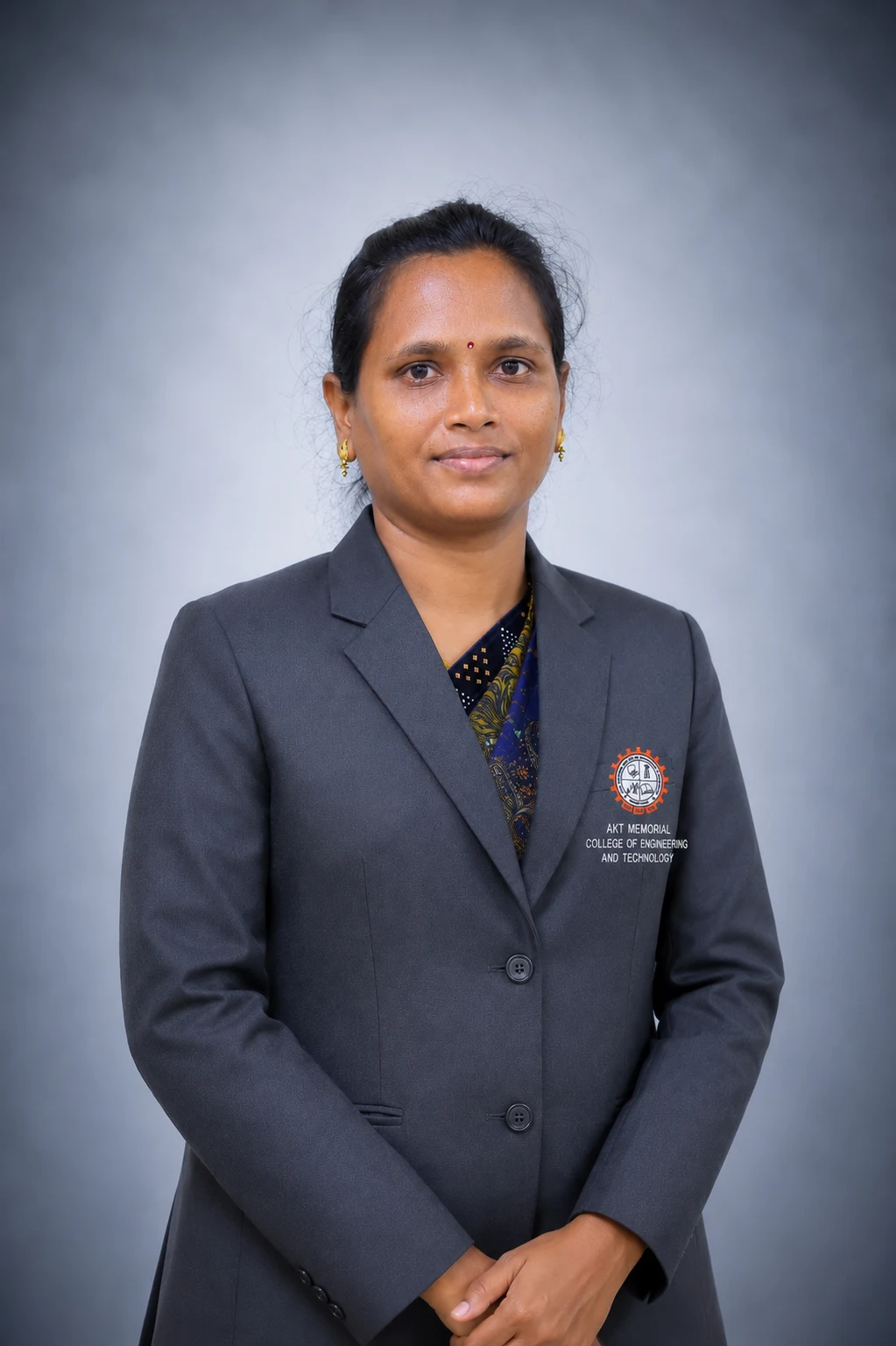
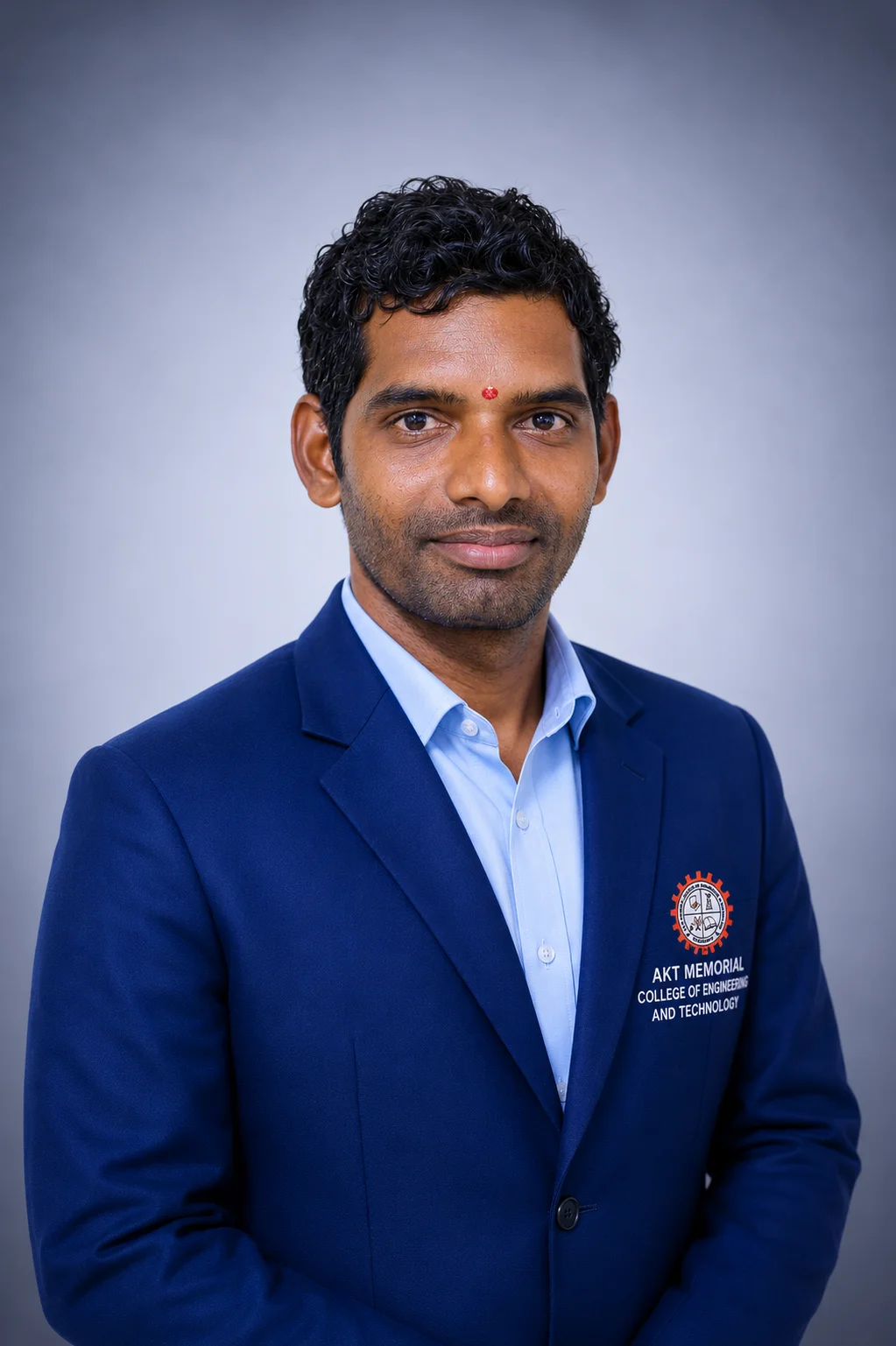
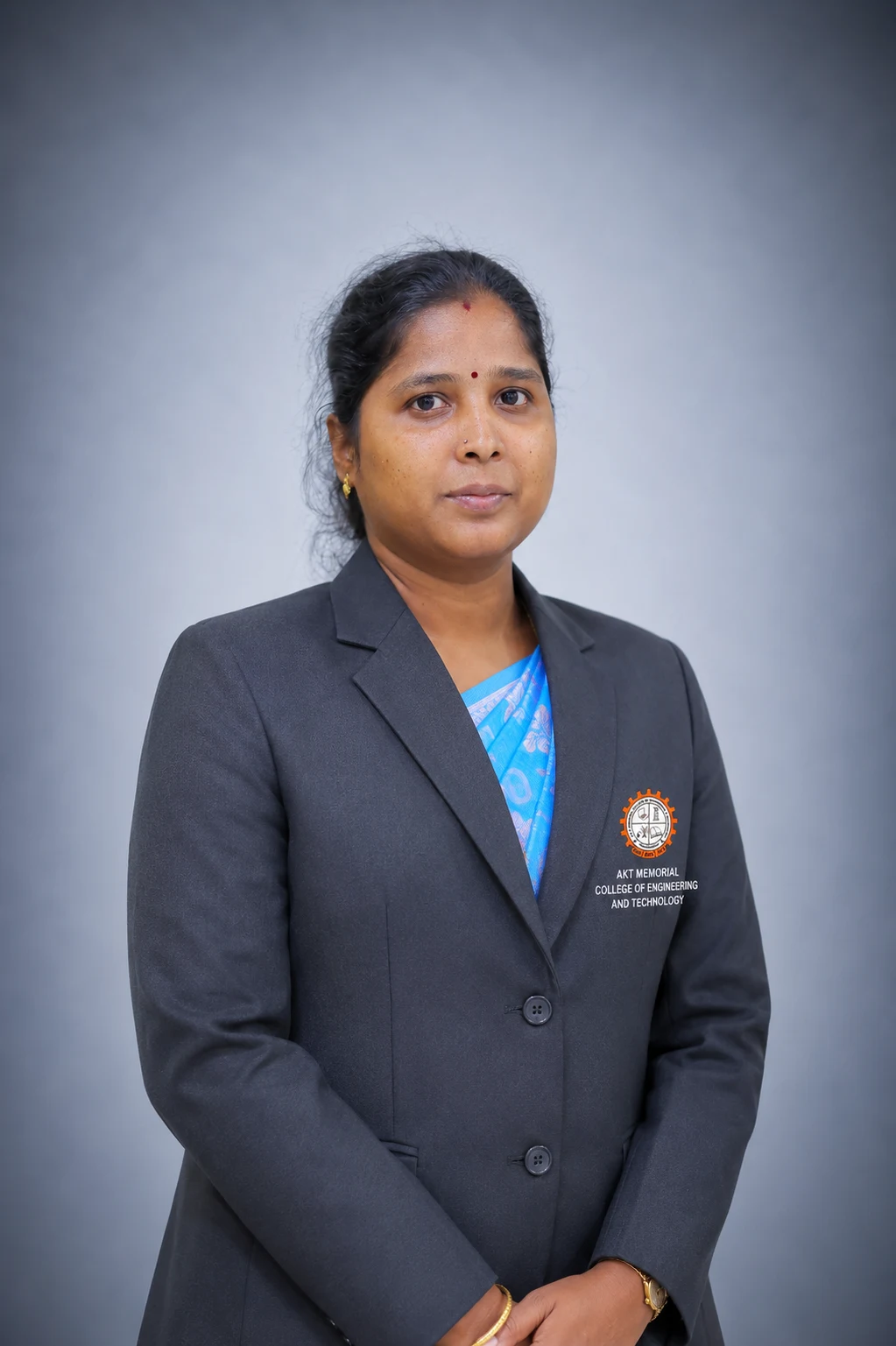
Meet our faculty members
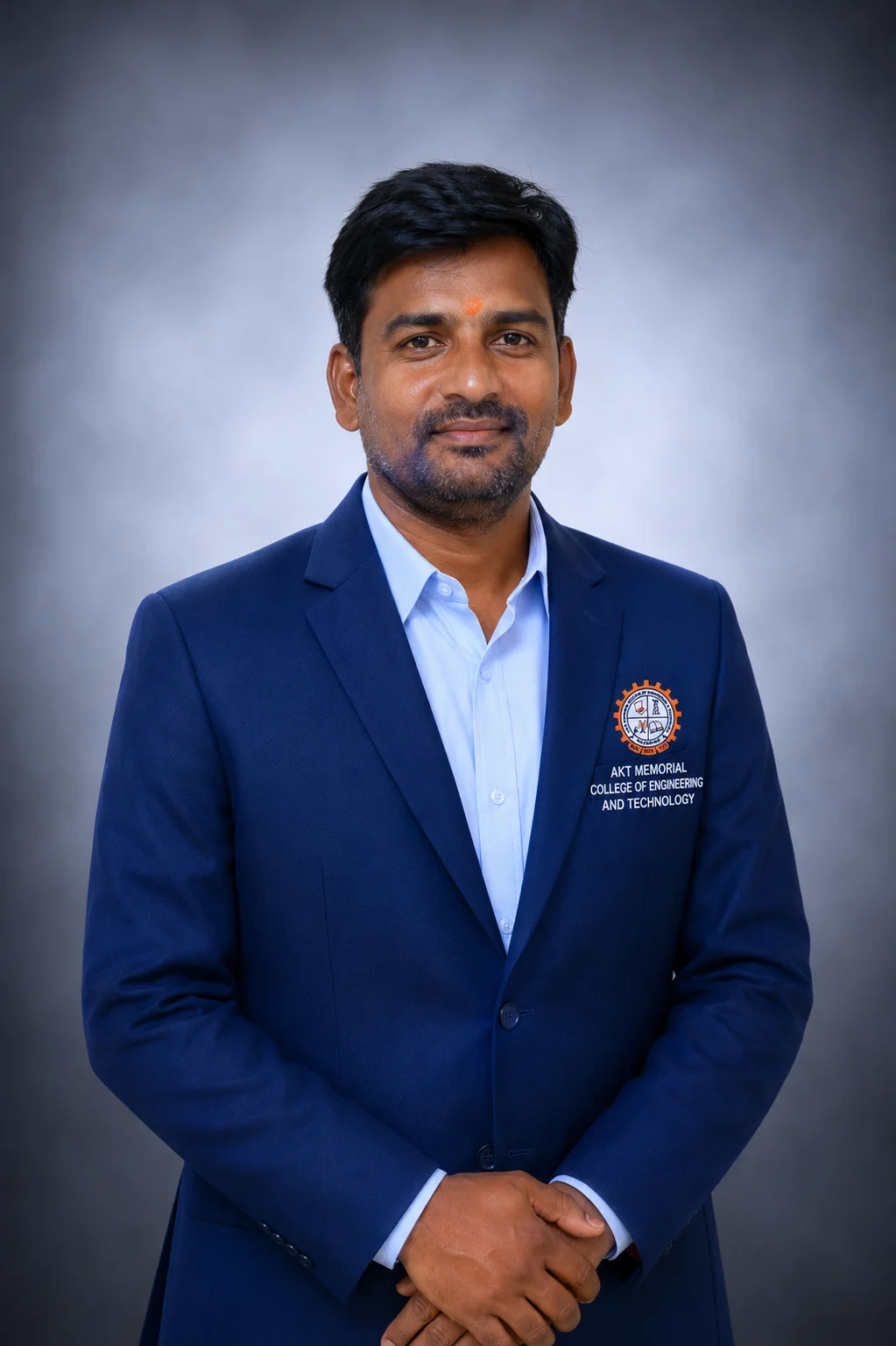
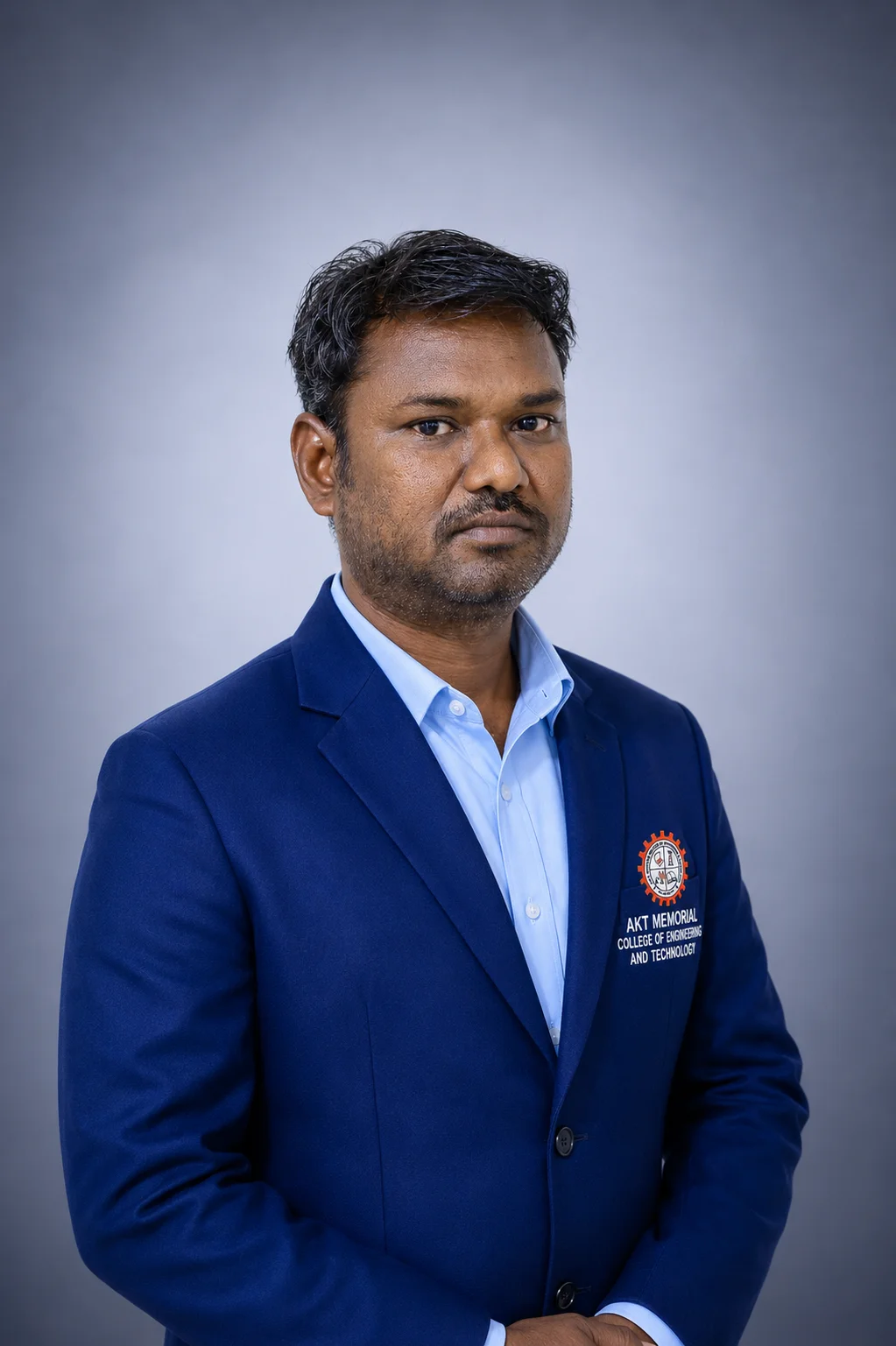
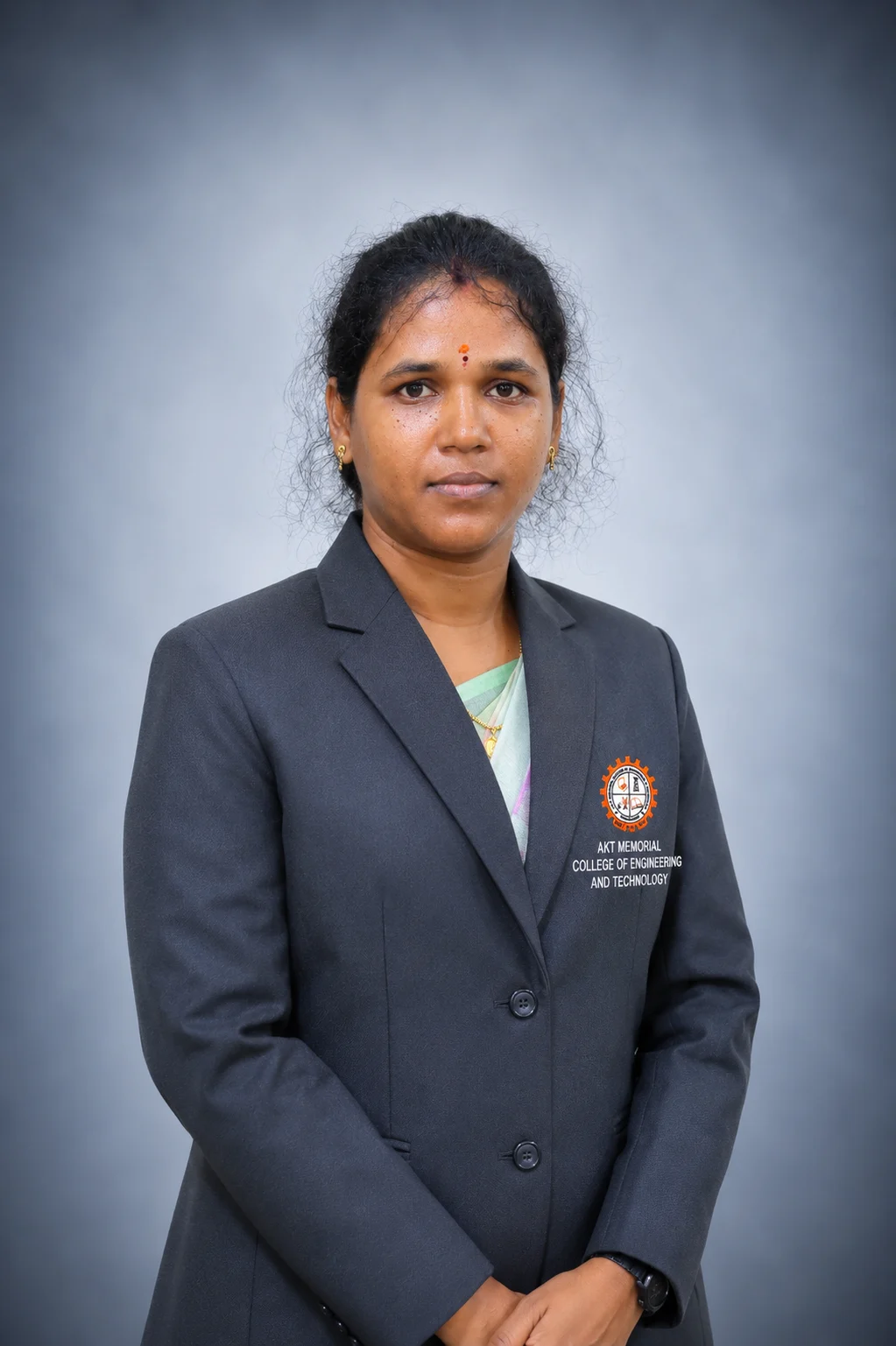
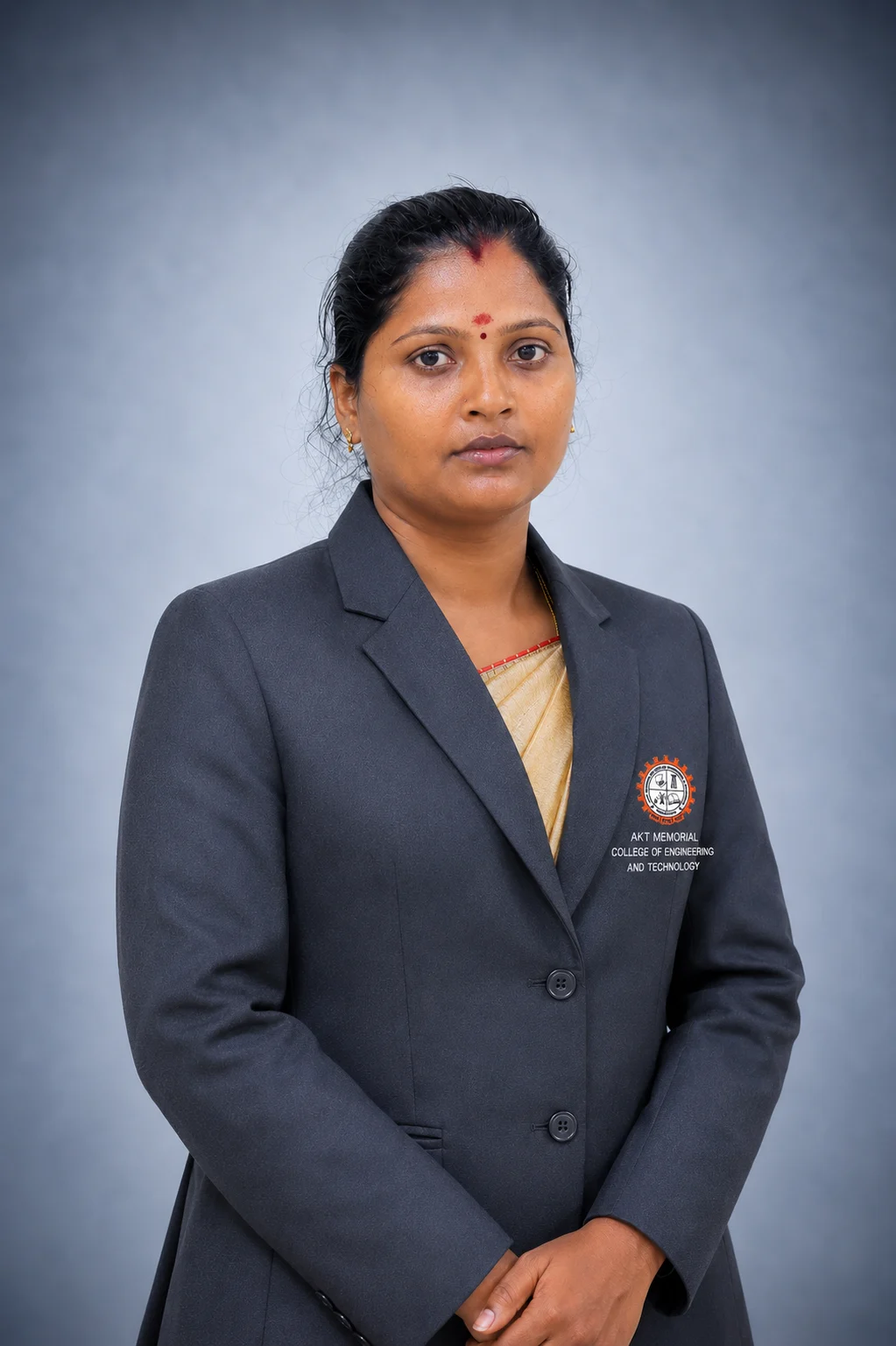
Mr. S.S. RAJU
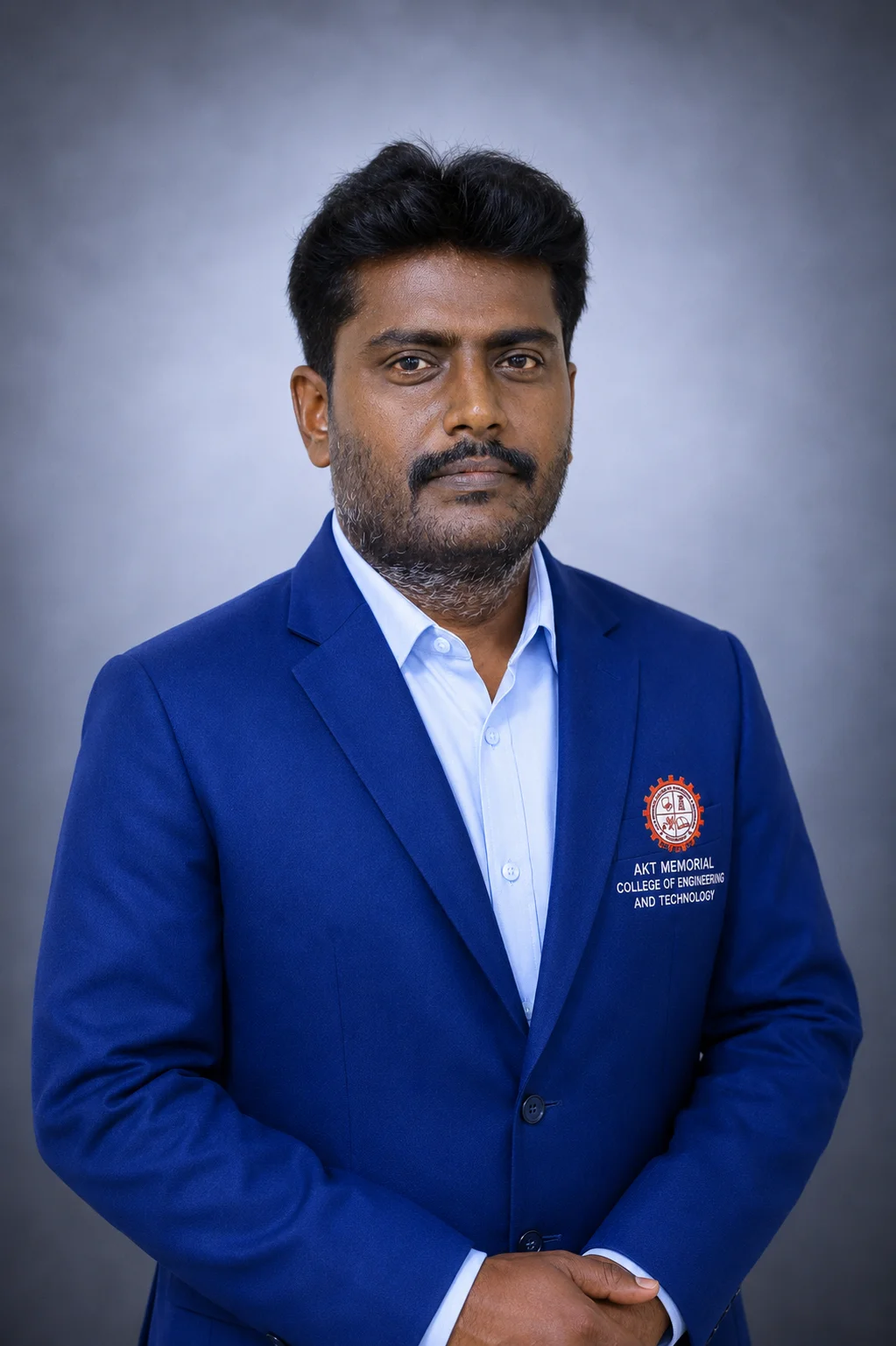
HoD

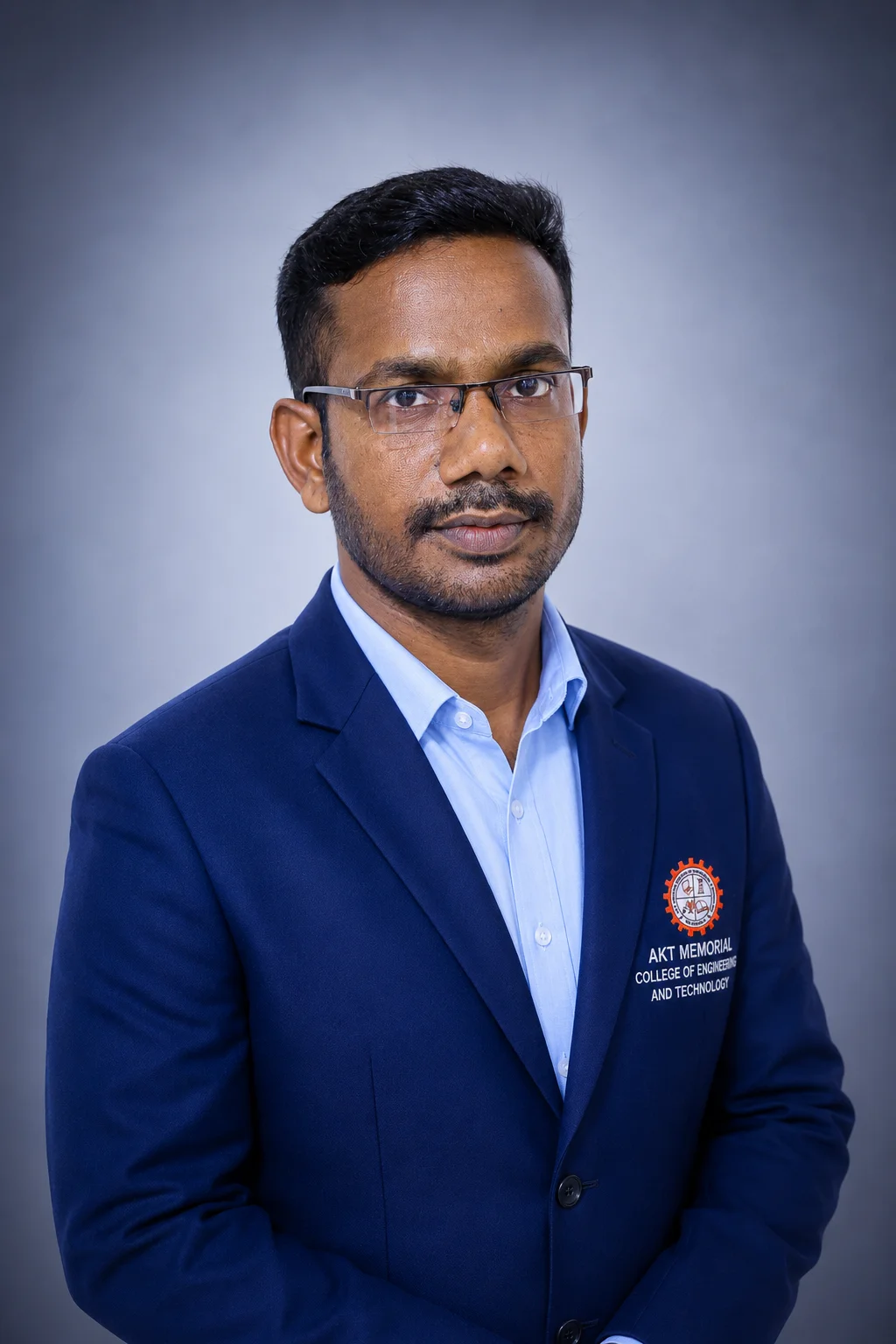
Dr. M.P. PRABAKARAN

Assistant Professor

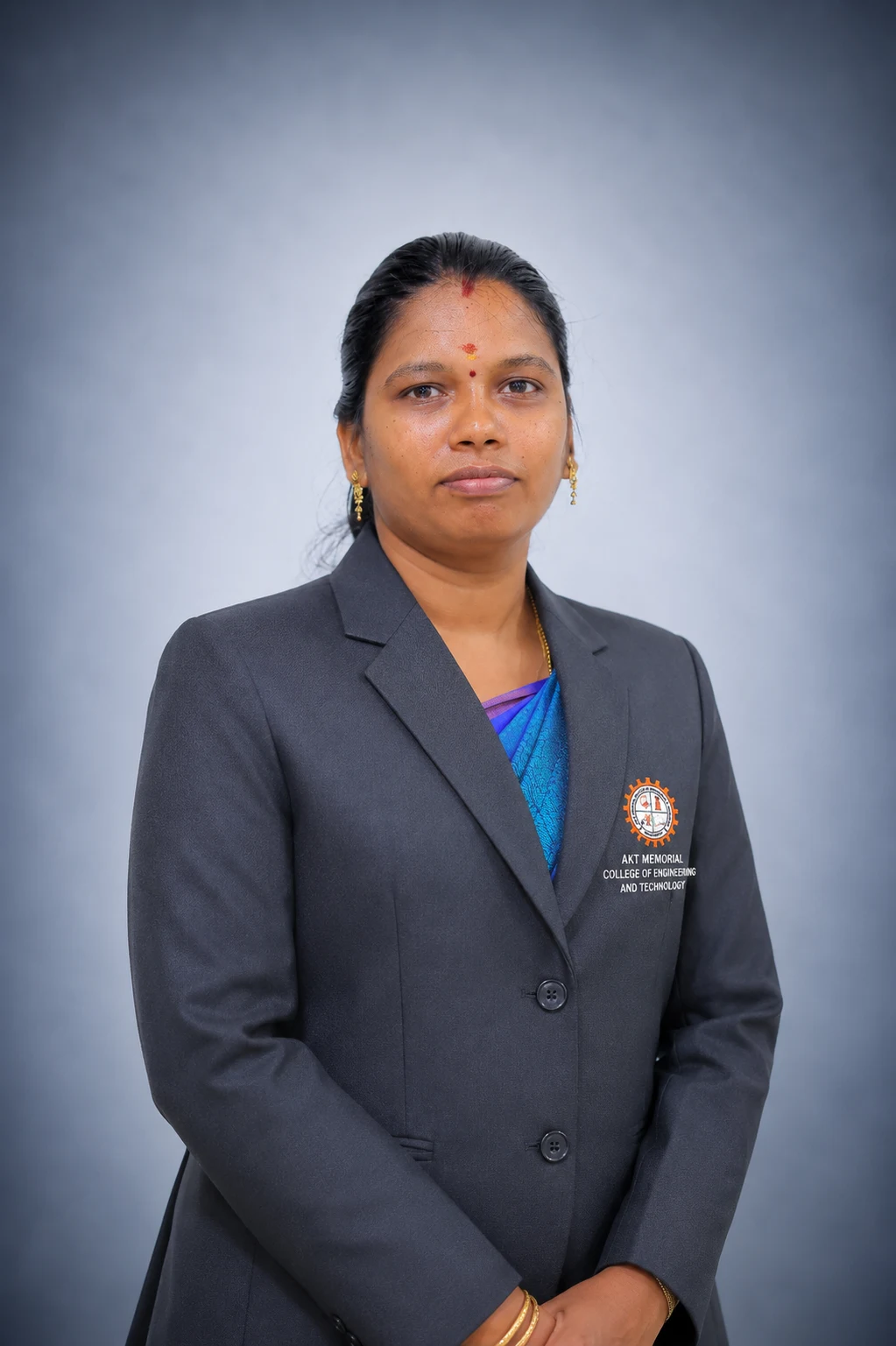
Mrs. G. GAYATHRI

Assistant Professor

Mr.A. SILAMBARASAN

Assistant Professor

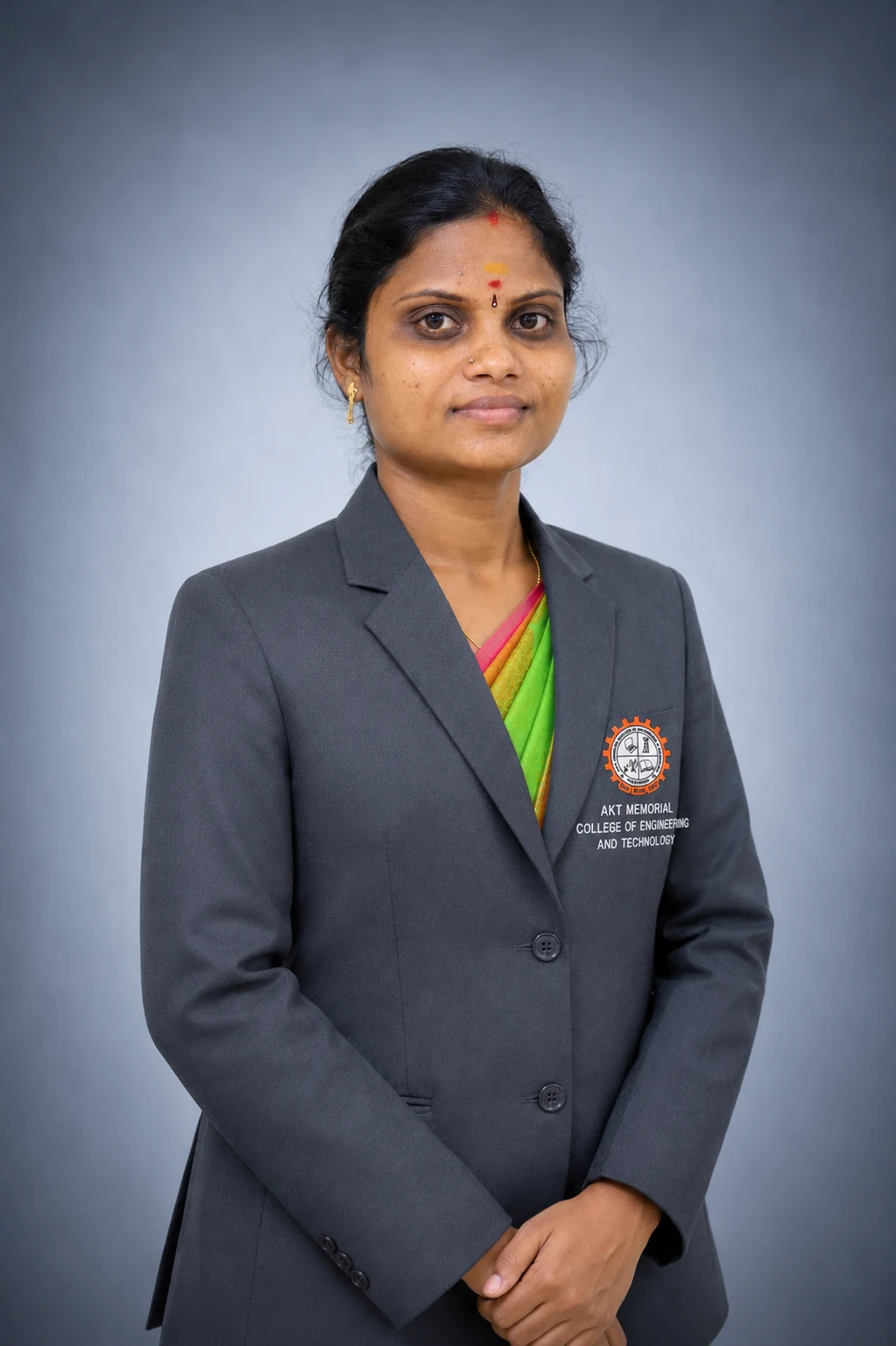
Mrs. M.S. Sathya

Assistant Professor

Mr. K. DINESH

Assistant Professor

Mr. R. RAVI

Assistant Professor

Mrs. R. SURIYA

Assistant Professor

Mrs. K Bhubaneshwari

Assistant Professor

Mrs. N. Rajeshwari

Assistant Professor

Mrs. J. Vanaja

Assistant Professor
Activity

Activity Details

A.K.T MEMORIAL COLLEGE OF ENGINEERING AND TECHNOLOGY
DEPARTMENT OF ELECTRONICS AND COMMUNICATION ENGINEERING
STUDENT CO – CURRICULAR ACTIVTIES & PARTICIPIATION DETAILS

S. No. Name of the Student Participation College / Industry Title Award / Duration
1
  • Ramu.M
  • Ilavazhagan.E
  • Dhinakaran.I
Symposium Annai Teresa College of Engineering and Technology Body Fall Detection and Heart Rate Monitoring Third Prize
2
  • Ramu.M
  • Veerappan.E
  • Ilavazhagan.E
  • Dhinakaran.I
Symposium Annai Teresa College of Engineering and Technology Circuit Debugging Second Prize
3
  • Emily Sara Kurian
  • Reshma.F
  • Dhinakaran.I
  • C. Yogi
Symposium VRS College of Engineering and Technology Gas Sensor First Prize
4
  • Dhinakaran.I
  • C. Yogi
Symposium VRS College of Engineering and Technology Circuit Debugging Second Prize
5
  • M. Ramu
  • E. Ilavazhagan
Symposium MRK Institute of Technology Paper Presentation Second Prize
6
  • M. Ramu
  • E. Ilavazhagan
Symposium MRK Institute of Technology Technical Quiz Second Prize
7
  • M. Ramu
  • E. Ilavazhagan
  • I. Dhinakaran
  • C. Yogi
Symposium MRK Institute of Technology Circuit Debugging Third Prize
8
  • M. Ramu
  • E. Ilavazhagan
Workshop Kongunadu College of Engineering and Technology Recycling of E-waste into Nano Particles for Construction One Day Participation
9
  • S. Vijay
  • A. Sathish
  • G. Vignesh
Symposium VRS College of Engineering and Technology Paper Presentation One Day Participation
10
  • S. Vijay
  • G. Vignesh
  • R. Periyasamy
Conference Idhaya Engineering College for Women Paper Presentation One Day Participation
11
  • S. Vijay
  • G. Vignesh
  • R. Periyasamy
  • S. Kasiyamal
  • R. Karuthamal
  • C. Dayana
  • T. Mohana Priya
  • G. S. Bakkiya Lakshmi
Seminar BSNL, Cuddalore (IPT) - One Week
Events

Events